Indian Institute of Technology Madras
BS Degree Programme · Examination & Study Paper
Deep Learning
End Term · 31 Aug 2025 (Afternoon)
Examination Instructions & Guidelines
- Solve on notebook/paper first before checking solutions.
- MCQ: Exactly 1 option is correct. Negative marking applies.
- MSQ: One or more options correct. Select all to score.
- NAT: Numerical response. No negative marking.
- Scientific calculator allowed for all calculations.
- Official answer key is sealed at the end of this sheet.
- Q1MCQ2 Marks·Choose one option
Consider the following two statements regarding model performance: Statement 1: A model achieving zero training loss is guaranteed to perform well on unseen data. Statement 2: Incorporating a regularization term in the loss function may lead to higher training loss but lower generalization error. Which of the following options is correct?
- ABoth Statement 1 and Statement 2 are true.
- BStatement 1 is true, but Statement 2 is false.
- CNone of these.
- DStatement 1 is false, but Statement 2 is true.
- Q2MCQ2 Marks·Choose one option
How does unsupervised layerwise pretraining help in alleviating the vanishing gradient problem?
- AIt allows the network to learn a better representation of the data in each layer, which leads to better- initialized weights for subsequent supervised training.
- BIt adds skip connections to the network, which are then removed before the supervised training.
- CIt replaces the sigmoid functions with ReLU functions during the pretraining phase.
- DIt regularizes the network’s weights, making them smaller and less likely to cause the gradients to explode.
- Q3MSQ2 Marks·Choose all correct options
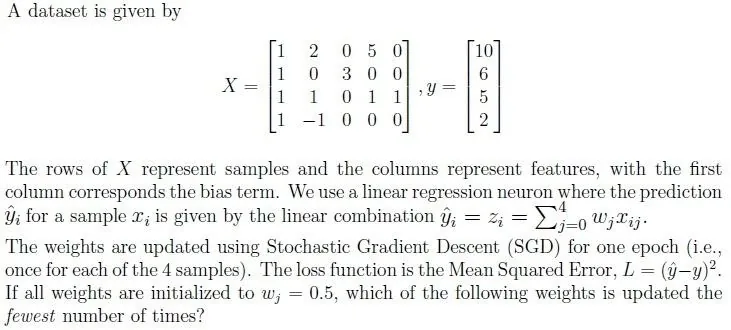
- A

- B

- C

- D

- E

- A
- Q4NAT3 Marks·Write the number
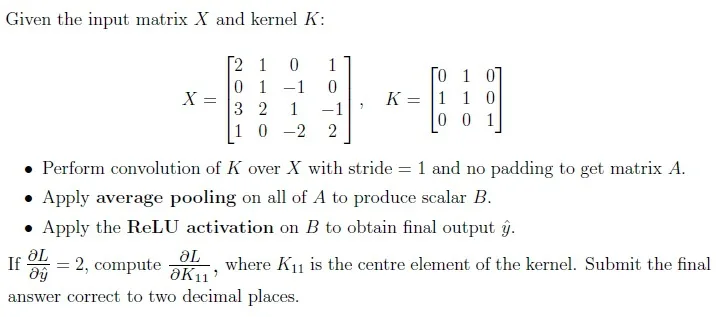 Your answer:
 Read the passage below, then answer Q5–Q7
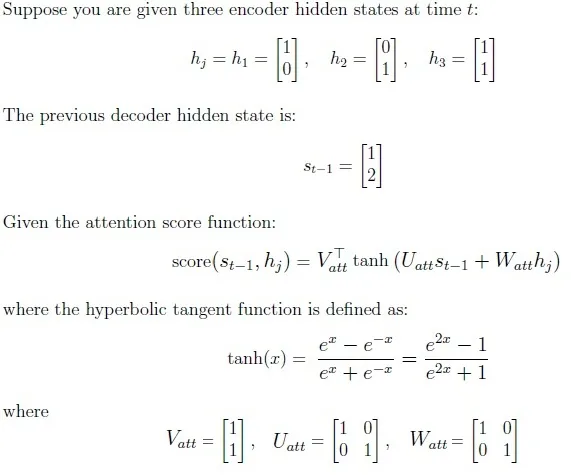
Based on the above data, answer the given subquestions.
Q5NAT2 Marks·Write the number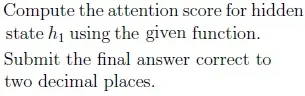 Your answer:
- Q6NAT4 Marks·Write the number
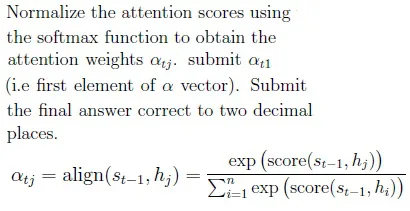 Your answer:
 - Q7NAT2 Marks·Write the number
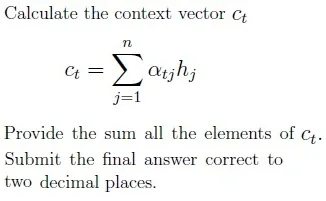 Your answer:
 Read the passage below, then answer Q8–Q10
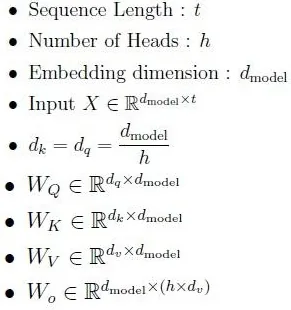
Based on the above data, answer the given subquestions.
Q8NAT2 Marks·Write the number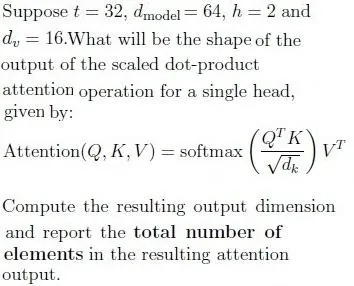 Your answer:
- Q9NAT2 Marks·Write the number
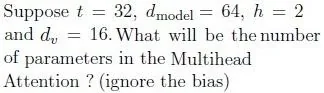 Your answer:
 - Q10NAT1 Mark·Write the number
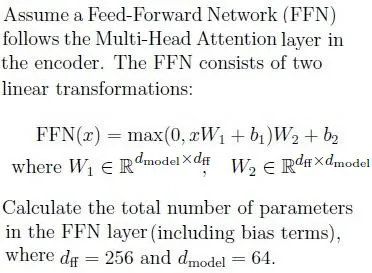 Your answer:
 Read the passage below, then answer Q11–Q13
Consider a CBOW model for learning word embeddings. The vocabulary is made up of three words, {good, bad, ugly}. W and C are the matrices that contain the word and context embeddings respectively. The columns in each matrix correspond to the embeddings. Both matrices are of shape 2 x 3:

The context window is 1, meaning, the next word is predicted using just the current word as context. Recall that we use softmax to make predictions at the output.
Based on the above data, answer the given subquestions.
Q11NAT2 Marks·Write the number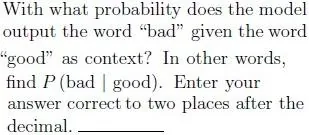 Your answer:
- Q12MCQ2 Marks·Choose one option
The CBOW model is now used to generate a “sentence” or a string of words. First we pass the word “good” and retain the word with highest probability as the output, say word_1, which is in turn passed as input to the model. If the model is run this way for exactly three time steps, what is the sentence that it outputs? Note that the sentence here is “word_1 word_2 word_3”.
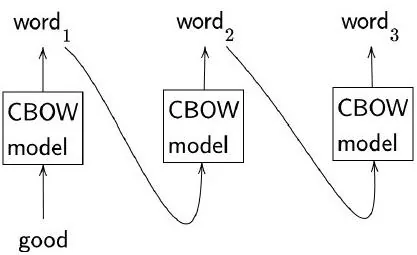
- Abad ugly good
- Bgood bad ugly
- Cbad bad bad
- Dgood good good
- Ebad ugly bad
- Q13MCQ3 Marks·Choose one option
Now consider updating the word embeddings using the sample “good good”. The first “good” in the string is used as context and the second “good” as the true label. Use cross entropy as the loss function and run one iteration of gradient descent with η = 1 starting with the existing values for the embeddings. Find the updated word embedding for “good” and choose the most appropriate option from below. Note that you have to compute the updated word embedding for “good” and not its context embedding.
- A(1.76, -0.24)
- B(1.24, -0.76)
- C(1.76, 1.76)
- D(1.76, -1.76)
- E(1.24, -1.24)
Read the passage below, then answer Q14–Q17
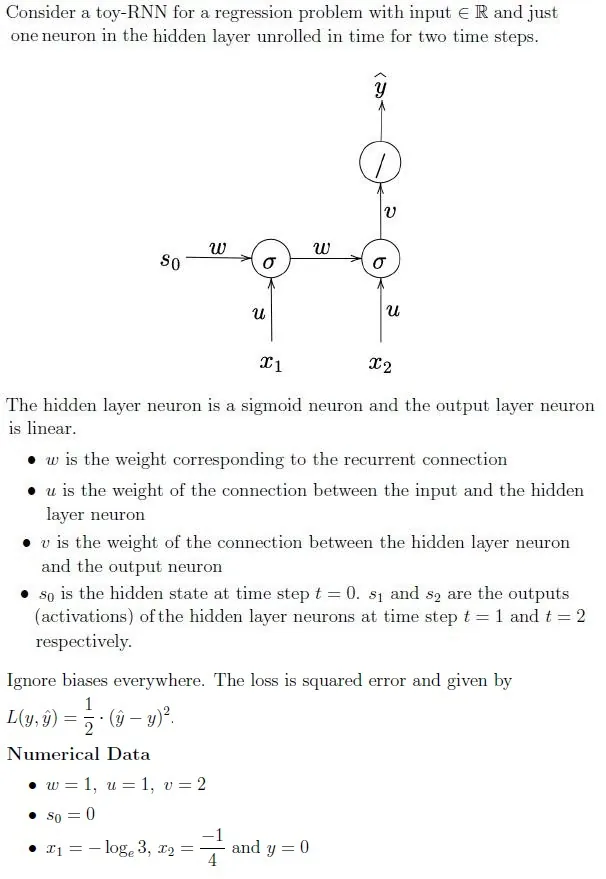
Based on the above data, answer the given subquestions.
Q14NAT1 Mark·Write the number Your answer:
- Q15NAT2 Marks·Write the number
 Your answer:
 - Q16NAT1 Mark·Write the number
 Your answer:
 - Q17NAT3 Marks·Write the number
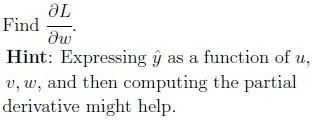 Your answer:
 Read the passage below, then answer Q18–Q19
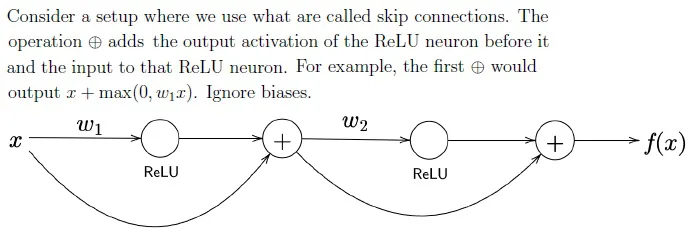
Based on the above data, answer the given subquestions.
Q18NAT2 Marks·Write the number Your answer:
- Q19NAT2 Marks·Write the number
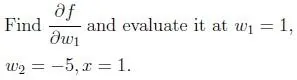 Your answer: