Indian Institute of Technology Madras
BS Degree Programme · Examination & Study Paper
Deep Learning
Most repeated questions
Examination Instructions & Guidelines
- Solve on notebook/paper first before checking solutions.
- MCQ: Exactly 1 option is correct. Negative marking applies.
- MSQ: One or more options correct. Select all to score.
- NAT: Numerical response. No negative marking.
- Scientific calculator allowed for all calculations.
- Official answer key is sealed at the end of this sheet.
Type 1 · asked 3 times · Backpropagation by hand
Compute ŷ by a forward pass through a small network
Read the passage below, then answer Q1
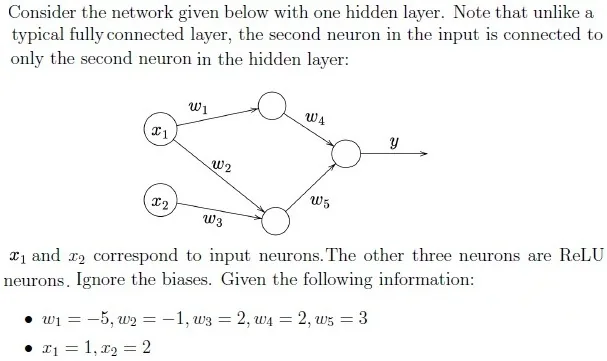
Based on the above data, answer the given subquestions.
Q1NAT1 Mark·Write the numberEnd Term · 13 Apr 2025 (AN)Key ↓Find the value y at the end of the forward pass.
Your answer:Read the passage below, then answer Q2
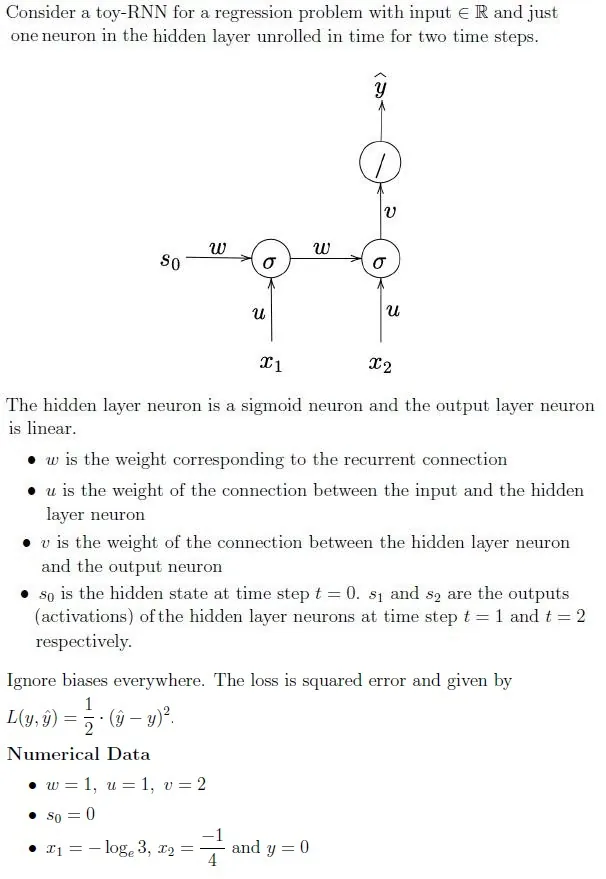
Based on the above data, answer the given subquestions.
Q2NAT1 Mark·Write the numberEnd Term · 31 Aug 2025 (AN)Key ↓ Your answer:
Read the passage below, then answer Q3
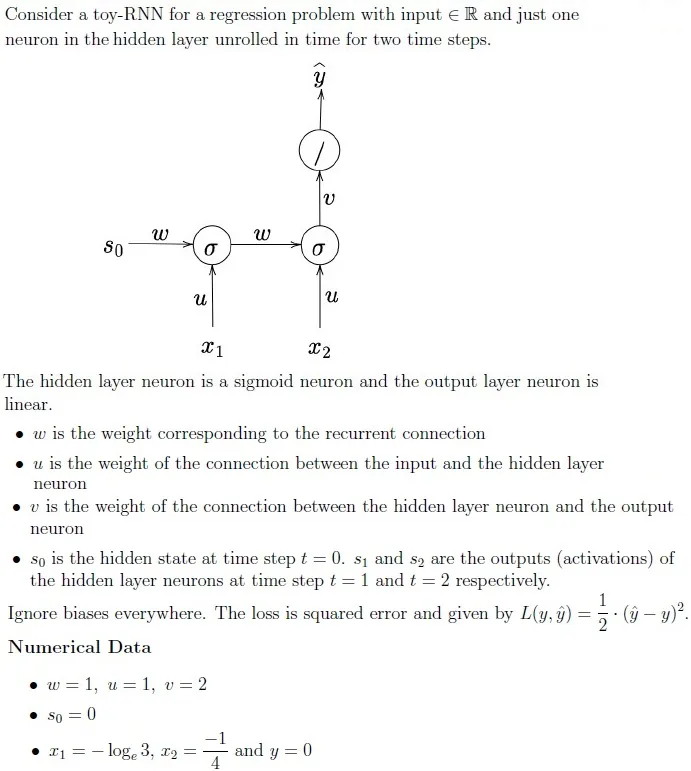
Based on the above data, answer the given subquestions.
Q3NAT1 Mark·Write the numberEnd Term · 31 Aug 2025 (FN)Key ↓ Your answer:
Type 2 · asked 3 times · Backpropagation by hand
Compute a weight derivative by the chain rule in a small network
Read the passage below, then answer Q4
Based on the above data, answer the given subquestions.
Q4NAT1 Mark·Write the numberEnd Term · 13 Apr 2025 (AN)Key ↓ Your answer:
Read the passage below, then answer Q5
Based on the above data, answer the given subquestions.
Q5NAT3 Marks·Write the numberEnd Term · 31 Aug 2025 (AN)Key ↓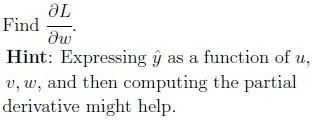 Your answer:
Read the passage below, then answer Q6
Based on the above data, answer the given subquestions.
Q6NAT3 Marks·Write the numberEnd Term · 31 Aug 2025 (FN)Key ↓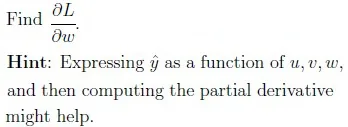 Your answer:
Type 3 · asked 3 times · Convolutional neural networks
Find the gradient of the loss w.r.t. one kernel element through conv + pooling
Read the passage below, then answer Q7
For a regression problem, consider an image X of size 4×4 and true label y that is passed through a toy convolutional network that has one convolutional layer with a single kernel followed by a max- pooling layer. Ignore the bias.
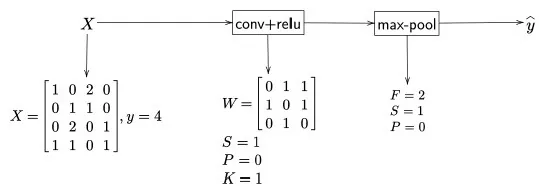
W denotes the kernel. S is the stride. P is the padding and K is the number of kernels. F is the spatial extent of the kernel for the max-pooling operation.
Based on the above data, answer the given subquestions.
Q7NAT4 Marks·Write the numberQuiz 2 · 3 Aug 2025 (AN)Key ↓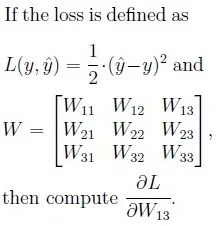 Your answer:
- Q8NAT3 Marks·Write the numberEnd Term · 31 Aug 2025 (AN)Key ↓
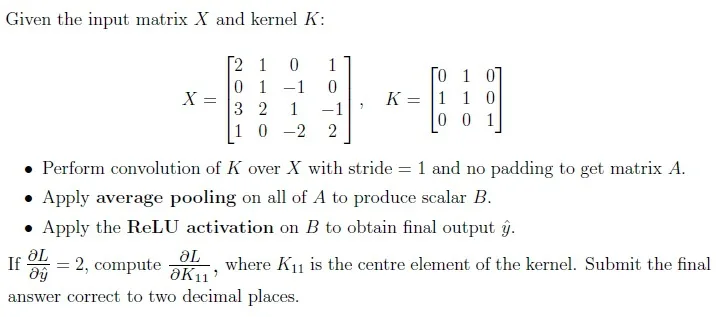 Your answer:
 Read the passage below, then answer Q9
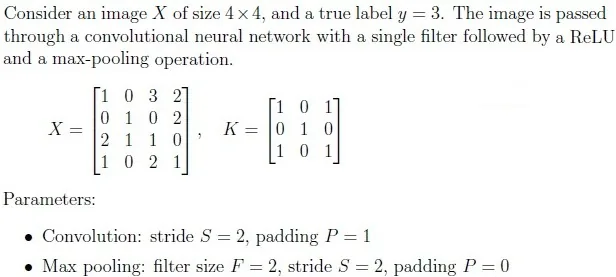
Based on the above data, answer the given subquestions.
Q9NAT2 Marks·Write the numberEnd Term · 31 Aug 2025 (FN)Key ↓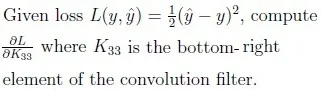 Your answer:
Type 4 · asked 3 times · Word embeddings (word2vec/CBOW)
Compute P(word | context) with softmax over word and context embeddings
Read the passage below, then answer Q10
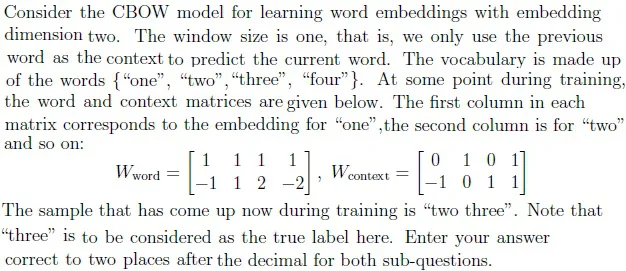
Based on the above data, answer the given subquestions.
Q10NAT2 Marks·Write the numberEnd Term · 13 Apr 2025 (AN)Key ↓Find the probability of predicting “three” given “two” as context.
Your answer:Read the passage below, then answer Q11
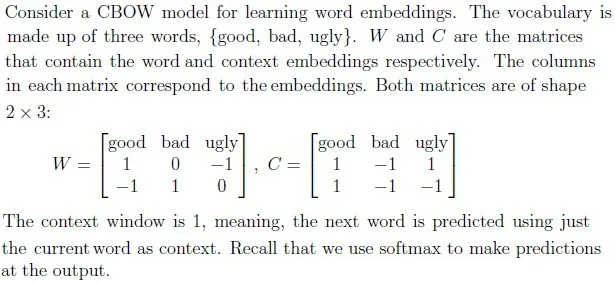
Consider a CBOW model for learning word embeddings. The vocabulary is made up of three words, {good, bad, ugly}. W and C are the matrices that contain the word and context embeddings respectively. The columns in each matrix correspond to the embeddings. Both matrices are of shape 2 x 3:

The context window is 1, meaning, the next word is predicted using just the current word as context. Recall that we use softmax to make predictions at the output.
Based on the above data, answer the given subquestions.
Q11NAT2 Marks·Write the numberEnd Term · 31 Aug 2025 (AN)Key ↓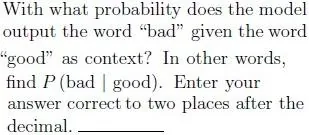 Your answer:
Read the passage below, then answer Q12
Based on the above data, answer the given subquestions.
Q12NAT2 Marks·Write the numberEnd Term · 31 Aug 2025 (FN)Key ↓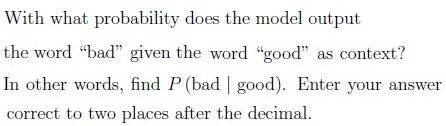 Your answer:
Type 5 · asked 3 times · Word embeddings (word2vec/CBOW)
Do one gradient descent update of a word embedding
Read the passage below, then answer Q13
Based on the above data, answer the given subquestions.
Q13NAT2 Marks·Write the numberEnd Term · 13 Apr 2025 (AN)Key ↓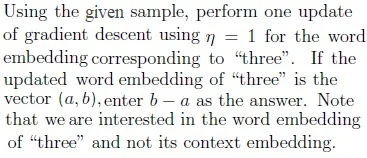 Your answer:
Read the passage below, then answer Q14
Consider a CBOW model for learning word embeddings. The vocabulary is made up of three words, {good, bad, ugly}. W and C are the matrices that contain the word and context embeddings respectively. The columns in each matrix correspond to the embeddings. Both matrices are of shape 2 x 3:
The context window is 1, meaning, the next word is predicted using just the current word as context. Recall that we use softmax to make predictions at the output.
Based on the above data, answer the given subquestions.
Q14MCQ3 Marks·Choose one optionEnd Term · 31 Aug 2025 (AN)Key ↓Now consider updating the word embeddings using the sample “good good”. The first “good” in the string is used as context and the second “good” as the true label. Use cross entropy as the loss function and run one iteration of gradient descent with η = 1 starting with the existing values for the embeddings. Find the updated word embedding for “good” and choose the most appropriate option from below. Note that you have to compute the updated word embedding for “good” and not its context embedding.
- A(1.76, -0.24)
- B(1.24, -0.76)
- C(1.76, 1.76)
- D(1.76, -1.76)
- E(1.24, -1.24)
Read the passage below, then answer Q15
Based on the above data, answer the given subquestions.
Q15MCQ3 Marks·Choose one optionEnd Term · 31 Aug 2025 (FN)Key ↓Now consider updating the word embeddings using the sample “good good”. The first “good” in the string is used as context and the second “good” as the true label. Use cross entropy as the loss function and run one iteration of gradient descent with η = 1 starting with the existing values for the embeddings. Find the updated word embedding for “good” and choose the most appropriate option from below. Note that you have to compute the updated word embedding for “good” and not its context embedding.
- A(1.76, -0.24)
- B(1.24, -0.76)
- C(1.76, 1.76)
- D(1.76, -1.76)
- E(1.24, -1.24)
Type 6 · asked 2 times · Feedforward networks & output layers
Choose the output activation/loss for a regression target
- Q16MCQ1 Mark·Choose one optionEnd Term · 13 Apr 2025 (AN)Key ↓
A neural network is being trained for a regression problem in which the target is in the interval (−1, 1). Which of the following is NOT a good choice for the activation function at the output layer?
- AReLU
- BLinear (identity)
- CTanh
- Q17MSQ3 Marks·Choose all correct optionsQuiz 1 · 26 Oct 2025 (AN)Key ↓
You are adapting a neural network that was originally designed for a 10-class image classification problem to perform a regression task, specifically to predict the price of a car. Which of the following modifications are essential or standard practice for this conversion?
- AChange the activation function of the final output layer to a linear function.
- BSet the number of neurons in the output layer to one.
- CChange the loss function from Categorical Cross-Entropy to Mean Squared Error (MSE).
- DUse accuracy as the primary metric to evaluate the model’s performance.
- EKeep the softmax activation function in the output layer to scale the predicted price.
Type 7 · asked 2 times · Convolutional neural networks
Find conv output size or padding with (W - F + 2P)/S + 1
- Q18NAT3 Marks·Write the numberEnd Term · 13 Apr 2025 (AN)Key ↓
The input volume to a convolutional layer is 100×100×5. If ten kernels, each of size 9 × 9, with unit stride are applied over this volume, what should be the padding so that the output volume has dimensions 100 × 100 × 10? Note that you should enter the value of P as per the convention we have been following.
Your answer: Read the passage below, then answer Q19
The input volume to a convolutional layer of a CNN has shape 64 × 64 × 8, where 8 is the depth or the number of channels. The conv-layer has 16 kernels each of spatial extent 5 × 5. The stride is 1 and padding is 2. Ignore biases.
Based on the above data, answer the given subquestions.
Q19MCQ3 Marks·Choose one optionQuiz 2 · 3 Aug 2025 (AN)Key ↓Which of these is the shape of the output volume after the convolution operation?
- A64 × 64 × 16
- B62 × 62 × 16
- C64 × 64 × 8
- D32 × 32 × 8
- E32 × 32 × 16
Type 8 · asked 2 times · Convolutional neural networks
Count the parameters of a convolution layer
Read the passage below, then answer Q20
Based on the above data, answer the given subquestions.
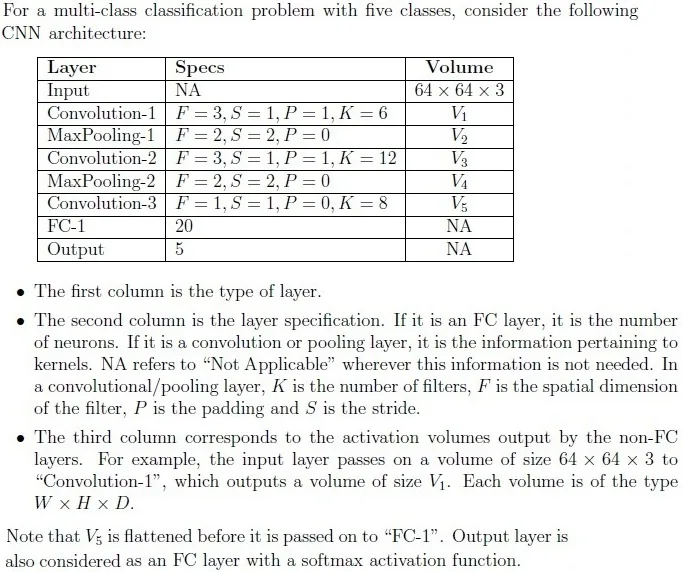
Q20NAT1 Mark·Write the numberEnd Term · 13 Apr 2025 (AN)Key ↓Find the number of parameters associated with the layer “Convolution-2” that are required to transform V_2 to V_3. Ignore biases.
Your answer:Read the passage below, then answer Q21
The input volume to a convolutional layer of a CNN has shape 64 × 64 × 8, where 8 is the depth or the number of channels. The conv-layer has 16 kernels each of spatial extent 5 × 5. The stride is 1 and padding is 2. Ignore biases.
Based on the above data, answer the given subquestions.
Q21NAT3 Marks·Write the numberQuiz 2 · 3 Aug 2025 (AN)Key ↓Find the total number of parameters associated with the convolutional layer.
Your answer:
Type 9 · asked 2 times · Backpropagation by hand
Compute intermediate value s1 in the forward pass
Read the passage below, then answer Q22
Based on the above data, answer the given subquestions.
Q22NAT1 Mark·Write the numberEnd Term · 31 Aug 2025 (AN)Key ↓ Your answer:
Read the passage below, then answer Q23
Based on the above data, answer the given subquestions.
Q23NAT1 Mark·Write the numberEnd Term · 31 Aug 2025 (FN)Key ↓Find s1.
Your answer:
Type 10 · asked 2 times · Backpropagation by hand
Compute intermediate value s2 in the forward pass
Read the passage below, then answer Q24
Based on the above data, answer the given subquestions.
Q24NAT2 Marks·Write the numberEnd Term · 31 Aug 2025 (AN)Key ↓ Your answer:
Read the passage below, then answer Q25
Based on the above data, answer the given subquestions.
Q25NAT2 Marks·Write the numberEnd Term · 31 Aug 2025 (FN)Key ↓Find s2.
Your answer:
Type 11 · asked 2 times · Backpropagation by hand
Evaluate f(1) for the given weights w1 = 1, w2 = -5
Read the passage below, then answer Q26
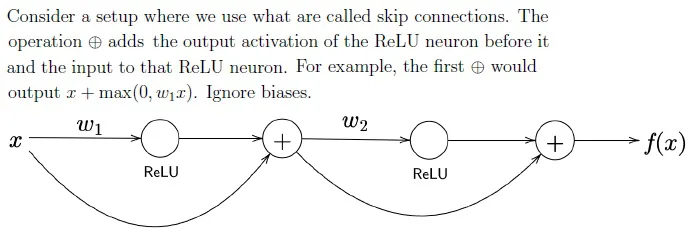
Based on the above data, answer the given subquestions.
Q26NAT2 Marks·Write the numberEnd Term · 31 Aug 2025 (AN)Key ↓ Your answer:
Read the passage below, then answer Q27
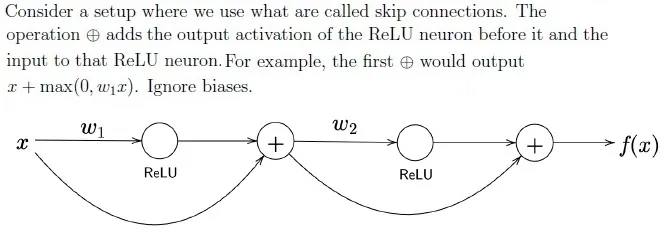
Based on the above data, answer the given subquestions.
Q27NAT2 Marks·Write the numberEnd Term · 31 Aug 2025 (FN)Key ↓ Your answer:
Type 12 · asked 2 times · Backpropagation by hand
Evaluate ∂f/∂w1 at given weights and input
Read the passage below, then answer Q28
Based on the above data, answer the given subquestions.
Q28NAT2 Marks·Write the numberEnd Term · 31 Aug 2025 (AN)Key ↓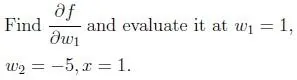 Your answer:
Read the passage below, then answer Q29
Based on the above data, answer the given subquestions.
Q29NAT2 Marks·Write the numberEnd Term · 31 Aug 2025 (FN)Key ↓ Your answer:
Type 13 · asked 2 times · Gradient descent & optimizers
Match loss plots to small, good and too-large learning rates
Read the passage below, then answer Q30
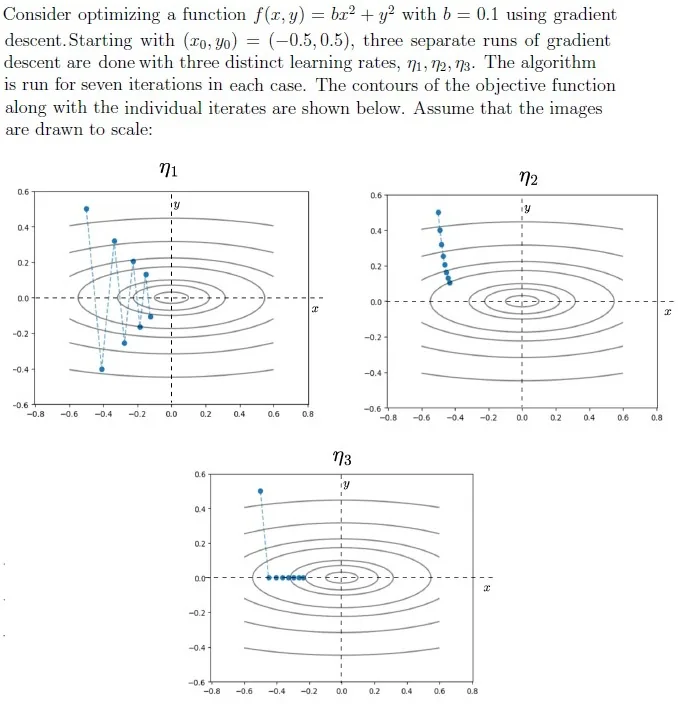
Based on the above data, answer the given subquestions.
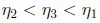
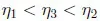
Q30MCQ2 Marks·Choose one optionEnd Term · 13 Apr 2025 (AN)Key ↓Which of these is the correct ordering among the learning rates?
- A
- B

- C
- D

- A
- Q31MCQ3 Marks·Choose one optionQuiz 1 · 26 Oct 2025 (AN)Key ↓
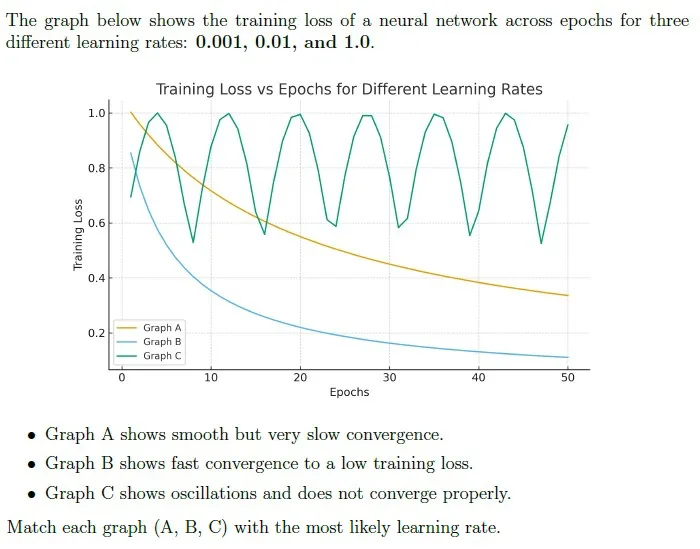
- AA → 0.01 , B → 0.001 , C → 1.0
- BA → 0.001 , B → 0.01 , C → 1.0
- CA → 1.0 , B → 0.001 , C → 0.01
- DA → 0.01 , B → 1.0 , C → 0.001
Type 14 · asked 2 times · Regularization & generalization
Judge two statements on training loss, optimization and regularization
- Q32MCQ2 Marks·Choose one optionEnd Term · 31 Aug 2025 (AN)Key ↓
Consider the following two statements regarding model performance: Statement 1: A model achieving zero training loss is guaranteed to perform well on unseen data. Statement 2: Incorporating a regularization term in the loss function may lead to higher training loss but lower generalization error. Which of the following options is correct?
- ABoth Statement 1 and Statement 2 are true.
- BStatement 1 is true, but Statement 2 is false.
- CNone of these.
- DStatement 1 is false, but Statement 2 is true.
- Q33MCQ2 Marks·Choose one optionEnd Term · 31 Aug 2025 (FN)Key ↓
Based on the two statements provided choose the correct option? Statement 1: Optimization’s primary goal is to reduce the training error. Statement 2: Regularization helps to prevent overfitting, which in turn reduces the training error.
- ABoth Statement 1 and Statement 2 are false.
- BStatement 1 is true, but Statement 2 is false.
- CStatement 1 is false, but Statement 2 is true.
- DBoth Statement 1 and Statement 2 are true.
Type 15 · asked 2 times · Regularization & generalization
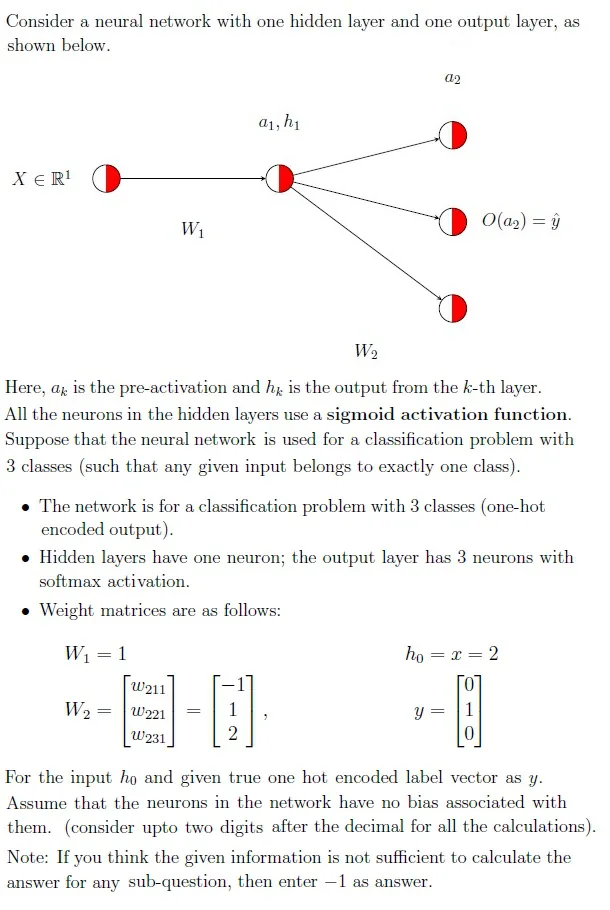
Compute the cross-entropy loss for a given prediction
- Q34NAT4 Marks·Write the numberQuiz 2 · 3 Aug 2025 (AN)Key ↓
 Your answer:
 Read the passage below, then answer Q35
Based on the above data, answer the given subquestions.
Q35NAT1 Mark·Write the numberQuiz 1 · 26 Oct 2025 (AN)Key ↓What is the value of the cross entropy loss? (use natural log). (Answer correct upto two digits after the decimal)
Your answer:
Type 16 · asked 2 times · Convolutional neural networks
Find the conv + ReLU output for a toy image and kernel
Read the passage below, then answer Q36
For a regression problem, consider an image X of size 4×4 and true label y that is passed through a toy convolutional network that has one convolutional layer with a single kernel followed by a max- pooling layer. Ignore the bias.
W denotes the kernel. S is the stride. P is the padding and K is the number of kernels. F is the spatial extent of the kernel for the max-pooling operation.
Based on the above data, answer the given subquestions.
Q36MCQ3 Marks·Choose one optionQuiz 2 · 3 Aug 2025 (AN)Key ↓Which of the following is the output produced by the conv+relu layer?
- A

- B

- C

- D

- A
Read the passage below, then answer Q37
Based on the above data, answer the given subquestions.
Q37MCQ2 Marks·Choose one optionEnd Term · 31 Aug 2025 (FN)Key ↓What is the output of the convolution layer after applying ReLU?
- A

- B

- C

- D

- A
Type 17 · asked 2 times · Convolutional neural networks
Find ŷ after conv and pooling in a toy CNN
Read the passage below, then answer Q38
For a regression problem, consider an image X of size 4×4 and true label y that is passed through a toy convolutional network that has one convolutional layer with a single kernel followed by a max- pooling layer. Ignore the bias.
W denotes the kernel. S is the stride. P is the padding and K is the number of kernels. F is the spatial extent of the kernel for the max-pooling operation.
Based on the above data, answer the given subquestions.
Q38NAT3 Marks·Write the numberQuiz 2 · 3 Aug 2025 (AN)Key ↓ Your answer:
Read the passage below, then answer Q39
Based on the above data, answer the given subquestions.
Q39NAT1 Mark·Write the numberEnd Term · 31 Aug 2025 (FN)Key ↓ Your answer:
Type 18 · asked 2 times · Word embeddings (word2vec/CBOW)
Generate a 3-word sentence greedily with a CBOW model
Read the passage below, then answer Q40
Consider a CBOW model for learning word embeddings. The vocabulary is made up of three words, {good, bad, ugly}. W and C are the matrices that contain the word and context embeddings respectively. The columns in each matrix correspond to the embeddings. Both matrices are of shape 2 x 3:
The context window is 1, meaning, the next word is predicted using just the current word as context. Recall that we use softmax to make predictions at the output.
Based on the above data, answer the given subquestions.
Q40MCQ2 Marks·Choose one optionEnd Term · 31 Aug 2025 (AN)Key ↓The CBOW model is now used to generate a “sentence” or a string of words. First we pass the word “good” and retain the word with highest probability as the output, say word_1, which is in turn passed as input to the model. If the model is run this way for exactly three time steps, what is the sentence that it outputs? Note that the sentence here is “word_1 word_2 word_3”.
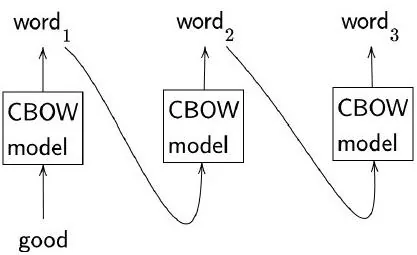
- Abad ugly good
- Bgood bad ugly
- Cbad bad bad
- Dgood good good
- Ebad ugly bad
Read the passage below, then answer Q41
Based on the above data, answer the given subquestions.
Q41MCQ2 Marks·Choose one optionEnd Term · 31 Aug 2025 (FN)Key ↓The CBOW model is now used to generate a “sentence” or a string of words. First we pass the word “good” and retain the word with highest probability as the output, say word_1, which is in turn passed as input to the model. If the model is run this way for exactly three time steps, what is the sentence that it outputs? Note that the sentence here is “word_1 word_2 word_3”.
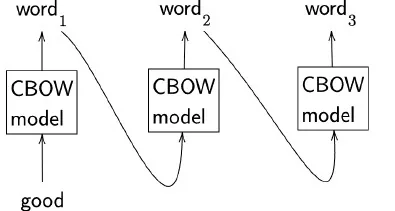
- Abad ugly good
- Bgood bad ugly
- Cbad bad bad
- Dgood good good
- Ebad ugly bad
Type 19 · asked 2 times · Transformers & self-attention
Find the shape of an attention matrix inside one head
Read the passage below, then answer Q42
Consider the multi-head self-attention mechanism in the encoder of a transformer with 8 heads. The word embedding dimension is 32. In a given head, the query, key and value vectors have the same dimension and each of them is 4. The sequence length is 5.
Based on the above data, answer the given subquestions.
Q42MCQ1 Mark·Choose one optionEnd Term · 13 Apr 2025 (AN)Key ↓In any given head, what is the dimension of the query-key product matrix?
- A5 × 5
- B4 × 4
- C8 × 8
- D32 × 32
Read the passage below, then answer Q43
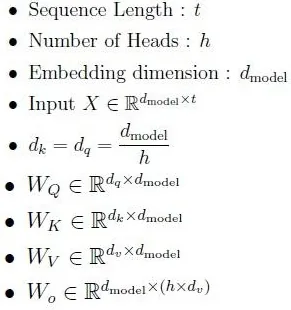
Based on the above data, answer the given subquestions.
Q43NAT2 Marks·Write the numberEnd Term · 31 Aug 2025 (AN)Key ↓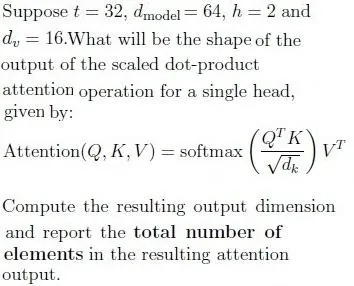 Your answer:
Official KeyMaster Answer Key & Explanations
Official answer keys from IIT Madras BS past papers. Click any question to review.
Reveal KeyCollapse Key
Master Answer Key & Explanations
Official answer keys from IIT Madras BS past papers. Click any question to review.