Indian Institute of Technology Madras
BS Degree Programme · Examination & Study Paper
Deep Learning for Computer Vision
Quiz 2 · 3 Aug 2025 (Afternoon)
Examination Instructions & Guidelines
- Solve on notebook/paper first before checking solutions.
- MCQ: Exactly 1 option is correct. Negative marking applies.
- MSQ: One or more options correct. Select all to score.
- NAT: Numerical response. No negative marking.
- Scientific calculator allowed for all calculations.
- Official answer key is sealed at the end of this sheet.
- Q1MCQ2 Marks·Choose one option
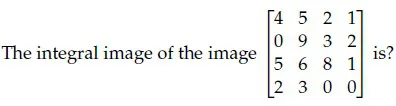
- A
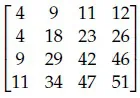
- B
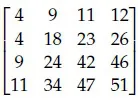
- C
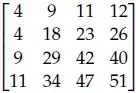
- D
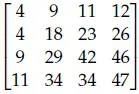
- A
- Q2MCQ2 Marks·Choose one option
Which of the following architectures introduced the ROI pooling layer for extracting fixed-size feature maps from variable-size region proposals?
- AR-CNN
- BFast R-CNN
- CFaster R-CNN
- DYOLO
- Q3MCQ2 Marks·Choose one option
Which object detection method first integrated a Region Proposal Network (RPN) to generate region proposals within the detection model?
- AR-CNN
- BFast R-CNN
- CFaster R-CNN
- DYOLO
- Q4MCQ2 Marks·Choose one option
Which architecture performs object detection as a single regression problem from image pixels to bounding boxes and class probabilities?
- AR-CNN
- BFast R-CNN
- CFaster R-CNN
- DYOLO
- Q5MCQ2 Marks·Choose one option
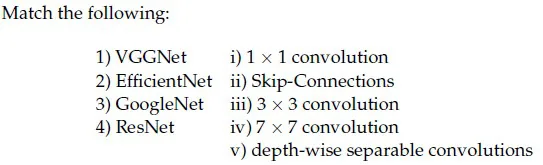
- A

- B

- C

- D

- A
- Q6MCQ2 Marks·Choose one option
Consider the following statements P and Q regarding AlexNet and choose the correct option: (P) In AlexNet, a trainable Local Response Normalization Layers were introduced to emulate the competitive nature of real neurons, where highly active neurons suppress the activity of neighboring neurons, creating competition among different kernel outputs. (Q) In AlexNet, a total of 8 Convolutional layers contain only about 6-7% of the total parameters hence account for the least computation.
- AOnly statement P is true
- BOnly statement Q is true
- CBoth statements are true
- DNone of these statements is true
- Q7NAT2 Marks·Write the number
Consider two bounding boxes in an image: - Box A: top-left at (0, 0), bottom-right at (12, 12) - Box B: top-left at (4, 4), bottom-right at (16, 16) What is the Intersection over Union (IoU) between these two boxes ____________(in %)
Your answer: - Q8MCQ2 Marks·Choose one option
Which one of the following statements is True?
- AAttention mechanisms can be applied to the bidirectional RNN model
- BAn image captioning network cannot be trained end-to-end even though we are using 2 different modalities to train the network
- COne of the key components in the vanilla transformer are the recurrent connections that help them to deal with variable input length.
- DAll of these.
- Q9MCQ2 Marks·Choose one option
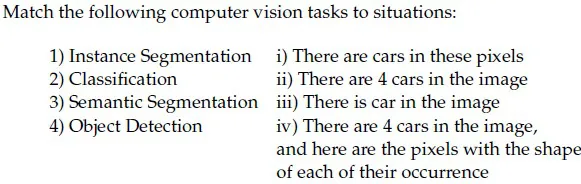
- A

- B

- C

- D

- A
- Q10MCQ2 Marks·Choose one option
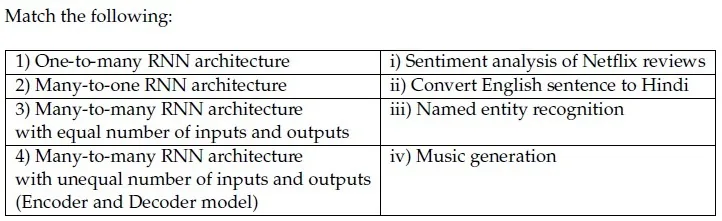
- A

- B

- C

- D

- A
- Q11MCQ2 Marks·Choose one option
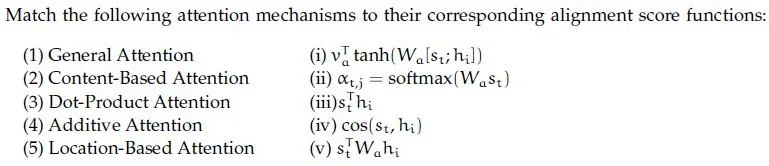
- A

- B

- C

- D

- A
- Q12MCQ2 Marks·Choose one option
Which of the following techniques help mitigate the vanishing gradient problem in recurrent neural networks? 1. Gradient clipping 2. Use of ReLU activation to preserve gradient flow 3. Use of LSTM units 4. Data augmentation (e.g., reversing input sequence)
- A1 and 2 only
- B2 and 3 only
- C3 and 4 only
- D1, 2, and 3 only
- Q13MCQ2 Marks·Choose one option
Which of the following techniques help mitigate the exploding gradient problem in recurrent neural networks? 1. Gradient clipping 2. Use of Sigmoid activation to prevent gradient growth 3. Use of LSTM units 4. Data augmentation (e.g., reversing input sequence)
- A1 and 2 only
- B1 and 3 only
- C1, 2, and 3
- DAll of these
- Q14MCQ2 Marks·Choose one option
Which one of the following statements is false? (Pick the most appropriate one.)
- AAttention mechanisms cannot be applied to the bidirectional RNN model
- BAn image captioning network cannot be trained end-to-end even though we are using 2 different modalities to train the network
- COne of the key components in the vanilla transformer is the recurrent connection that help them to deal with variable input length.
- DAll of these
- Q15MSQ3 Marks·Choose all correct options
Which of the following is true regarding Hard Attention and Soft Attention?
- ASoft Attention is smooth and differentiable
- BVariance reduction techniques are used to train Soft Attention models
- CSoft Attention is computationally cheaper than Hard Attention when the source input is large
- DThe inference (test time) overhead is low in Hard Attention when compared to Soft Attention models
- Q16MSQ3 Marks·Choose all correct options
Which of the following are true:
- A

- B

- C

- D

- A
- Q17NAT2 Marks·Write the number
Consider a Faster R-CNN object detection framework, which is being trained with a mini-batch size of 2. The RPN produces 512 proposals, out of which 256 and 128 of them are foreground proposals, corresponding to each image in the mini-batch. For a single mini-batch update, the bounding box regression loss will be computed_____________ times.
Your answer: Read the passage below, then answer Q18–Q19
Suppose you want to build an encoder-decoder recurrent model with attention. The context vector at time step t is given by:
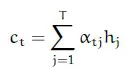
where α_(tj) refers to the alignment score between the decoder state at time t _____________and the encoder state at time _____________. Note: Please write your answer using variables
Based on the above data, answer the given subquestions.
Q18NAT1 Mark·Write the numberDecoder state at time t : _______________
Your answer:- Q19Short answer1 Mark·Write the answer
Encoder state at time: _______________
Your answer: Read the passage below, then answer Q20–Q25
Consider a Gated Recurrent Unit (GRU) cell at time step ’t’.
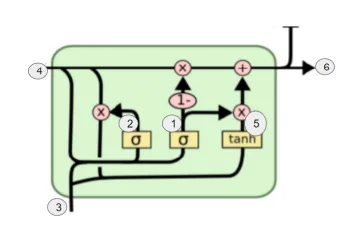
For each of the entities in the given subquestions, enter the appropriate number from the figure that corresponds to it:
Based on the above data, answer the given subquestions.
Q20NAT0.66 Marks·Write the numberHidden state h_(t−1)______________
Your answer:- Q21NAT0.66 Marks·Write the number
Hidden state h_t_____________
Your answer: - Q22NAT0.67 Marks·Write the number
Current Input x_t________________
Your answer: - Q23NAT0.67 Marks·Write the number
Update gate z_t_______________
Your answer: - Q24NAT0.67 Marks·Write the number
Reset gate r_t ______________
Your answer: - Q25NAT0.67 Marks·Write the number
New hidden state content e_h____________
Your answer: Read the passage below, then answer Q26–Q27
Let input have size D_f × D_f × M where D_f = 10 and M = 256 and output feature map (after passing input through conv layer) has D_f × D_f × N size where N = 512. Assume padded convolution. Let width of the square kernel in conv layer be k where k = 7 (Ignore the bias term in the calculation). Calculate the number of parameters and computational cost for this convolution layer. Based on the above data, answer the given subquestions.
Q26NAT2 Marks·Write the numberNumber of Parameters:_____________
Your answer:- Q27NAT2 Marks·Write the number
Computational Cost:___________________
Your answer: Read the passage below, then answer Q28–Q31
Let input have size D_f × D_f × M where D_f = 10 and M = 256 and output feature map (after passing input through conv layer) has D_f × D_f × N size where N = 512. Assume padded convolution. Let width of the square kernel in conv layer be k where k = 7 (Ignore the bias term in the calculation), calculate the number of parameters and computational cost, but make use of Depthwise Seperable convolution and pointwise convolution instead of standard convolution. Based on the above data, answer the given subquestions.
Q28NAT1 Mark·Write the numberNumber of parameters for depthwise seperable convolution:_______________
Your answer:- Q29NAT1 Mark·Write the number
Computational Cost for depthwise seperable convolution:____________________
Your answer: - Q30NAT1 Mark·Write the number
Number of parameters for pointwise convolution:___________________
Your answer: - Q31NAT1 Mark·Write the number
Computational cost for pointwise convolution:__________________
Your answer: Read the passage below, then answer Q32–Q36
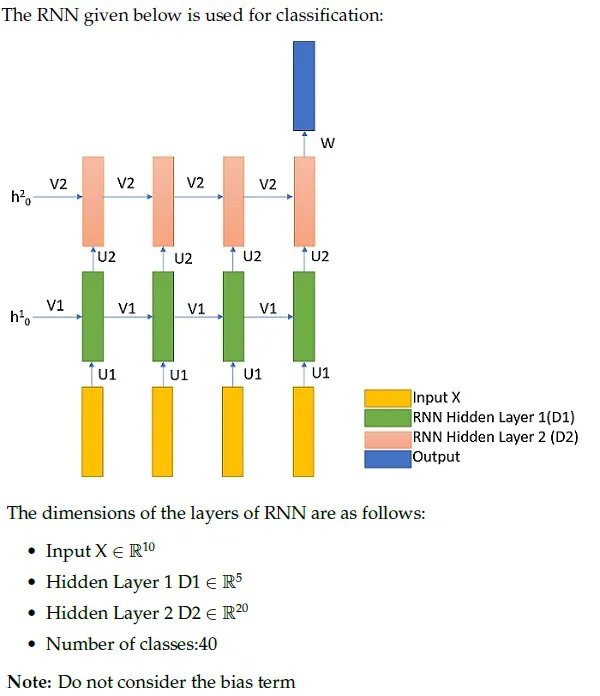
Based on the above data, answer the given subquestions.
Q32NAT0.8 Marks·Write the numberNumber of weights in Weight Matrix U1 is:______________
Your answer:- Q33NAT0.8 Marks·Write the number
Number of weights in Weight Matrix V1 is:______________
Your answer: - Q34NAT0.8 Marks·Write the number
Number of weights in Weight Matrix U2 is:__________________
Your answer: - Q35NAT0.8 Marks·Write the number
Number of weights in Weight Matrix V2 is:___________________
Your answer: - Q36NAT0.8 Marks·Write the number
Number of weights in Weight Matrix W is:_______________
Your answer: Read the passage below, then answer Q37–Q44
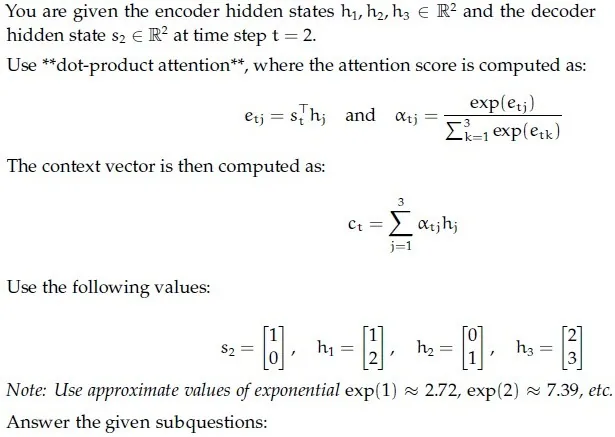 Q37NAT0.5 Marks·Write the number
e_(21): _________________
Your answer:- Q38NAT0.5 Marks·Write the number
e_(22): _________________
Your answer: - Q39NAT0.5 Marks·Write the number
e_(23): _________________
Your answer: - Q40NAT0.5 Marks·Write the number
α_(21): _________________
Your answer: - Q41NAT0.5 Marks·Write the number
α_(22): _________________
Your answer: - Q42NAT0.5 Marks·Write the number
α_(23): _________________
Your answer: - Q43NAT0.5 Marks·Write the number
c_(21): _________________
Your answer: - Q44NAT0.5 Marks·Write the number
c_(22): _________________
Your answer: Read the passage below, then answer Q45–Q52
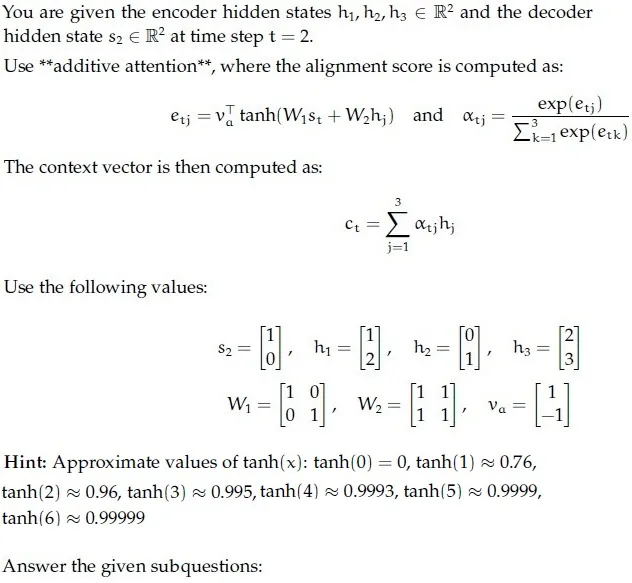 Q45NAT0.5 Marks·Write the number
e_(21):_________________
Your answer:- Q46NAT0.5 Marks·Write the number
e_(22):_________________
Your answer: - Q47NAT0.5 Marks·Write the number
e_(23):_________________
Your answer: - Q48NAT0.5 Marks·Write the number
α_(21):_________________
Your answer: - Q49NAT0.5 Marks·Write the number
α_(22):_________________
Your answer: - Q50NAT0.5 Marks·Write the number
α_(23):_________________
Your answer: - Q51NAT0.5 Marks·Write the number
c_(21):_________________
Your answer: - Q52NAT0.5 Marks·Write the number
c_(22):_________________
Your answer:
Official KeyMaster Answer Key & Explanations
Official answer keys from IIT Madras BS past papers. Click any question to review.
Reveal KeyCollapse Key
Master Answer Key & Explanations
Official answer keys from IIT Madras BS past papers. Click any question to review.
Detailed Answer Notes & Working
- Q19Answer: j
- Case-sensitive: the answer must match exactly.