Indian Institute of Technology Madras
BS Degree Programme · Examination & Study Paper
Deep Learning
All 2025 papers
Examination Instructions & Guidelines
- Solve on notebook/paper first before checking solutions.
- MCQ: Exactly 1 option is correct. Negative marking applies.
- MSQ: One or more options correct. Select all to score.
- NAT: Numerical response. No negative marking.
- Scientific calculator allowed for all calculations.
- Official answer key is sealed at the end of this sheet.
Quiz 1 · 26 Oct 2025 (AN)Quiz 1
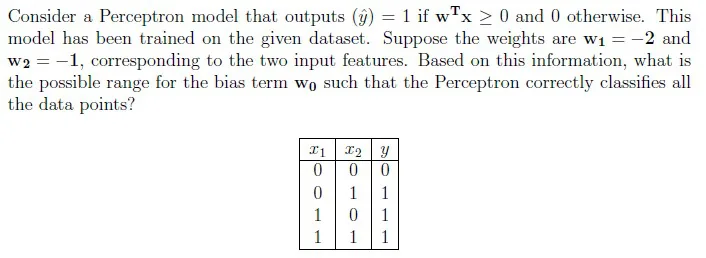
- Q1MCQ4 Marks·Choose one option
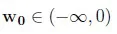
- A
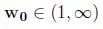
- B
- C

- D

- E

- A
- Q2MCQ3 Marks·Choose one option
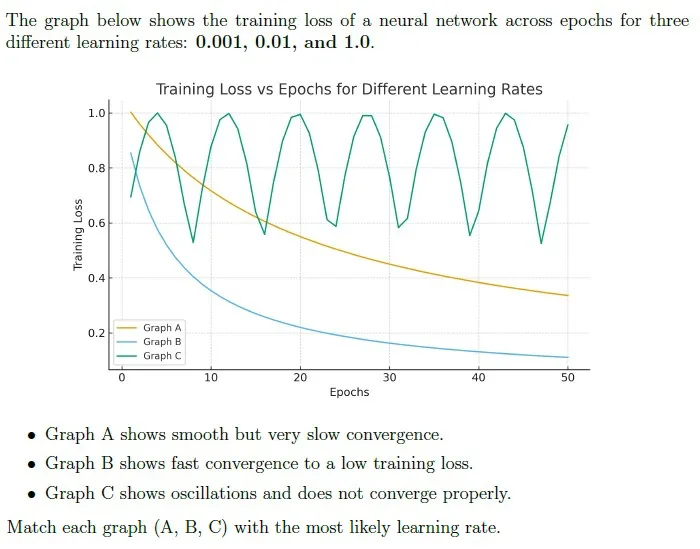
- AA → 0.01 , B → 0.001 , C → 1.0
- BA → 0.001 , B → 0.01 , C → 1.0
- CA → 1.0 , B → 0.001 , C → 0.01
- DA → 0.01 , B → 1.0 , C → 0.001
- Q3MCQ3 Marks·Choose one option
Which of the following statements best describes the primary representational advantage of a Multi-Layer Perceptron (MLP) over a Single-Layer Perceptron (SLP)?
- AAn MLP can learn non-linear decision boundaries, allowing it to classify data that is not linearly separable.
- BAn MLP converges faster than an SLP on linearly separable data because its hidden layers accelerate learning.
- CAn MLP is less prone to overfitting than an SLP because it has more parameters to capture the data distribution.
- DAn MLP can only be used for classification tasks, whereas an SLP can be used for both classification and regression.
- Q4MCQ3 Marks·Choose one option
A data scientist is training a deep learning model on a massive dataset containing billions of data points. They find that using traditional Batch Gradient Descent (GD) is computationally infeasible. What is the primary reason that makes Batch GD impractical for this task, thus requiring an alternative like Stochastic Gradient Descent (SGD)?
- AIt is impossible to fit the entire large dataset into the computer’s memory (RAM) at once.
- BThe gradient calculated by Batch GD is often too noisy and inaccurate, leading to poor convergence.
- CBatch GD is guaranteed to get stuck in sharp local minima, whereas SGD can escape them.
- DBatch GD requires calculating the gradient of the loss function with respect to the parameters over the entire dataset for a single update, which is computationally very expensive.
- Q5MCQ3 Marks·Choose one option
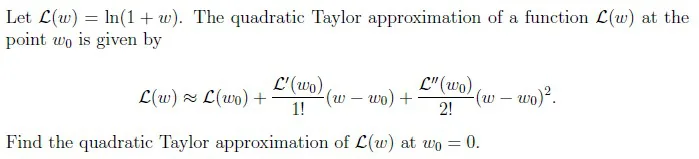
- A

- B

- C

- D

- A
- Q6MSQ3 Marks·Choose all correct options
You are adapting a neural network that was originally designed for a 10-class image classification problem to perform a regression task, specifically to predict the price of a car. Which of the following modifications are essential or standard practice for this conversion?
- AChange the activation function of the final output layer to a linear function.
- BSet the number of neurons in the output layer to one.
- CChange the loss function from Categorical Cross-Entropy to Mean Squared Error (MSE).
- DUse accuracy as the primary metric to evaluate the model’s performance.
- EKeep the softmax activation function in the output layer to scale the predicted price.
- Q7NAT3 Marks·Write the number
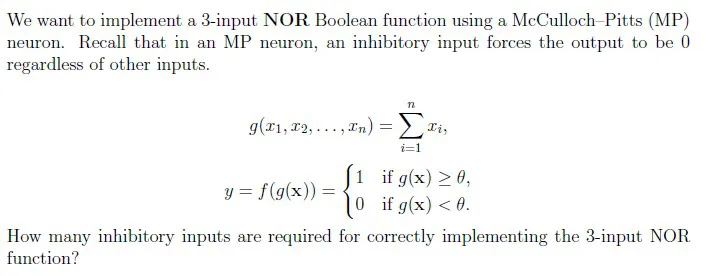 Your answer:
 - Q8NAT4 Marks·Write the number
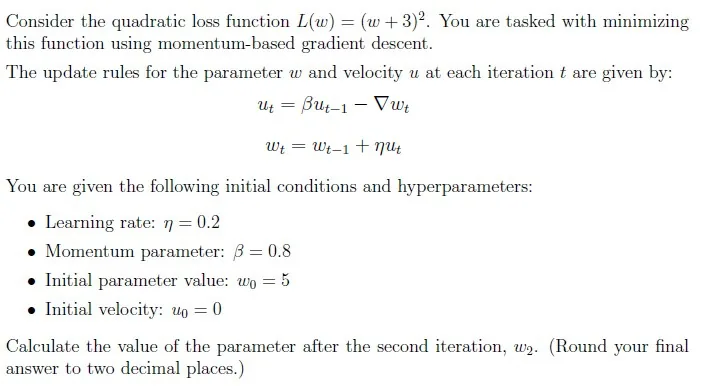 Your answer:
 Read the passage below, then answer Q9–Q12
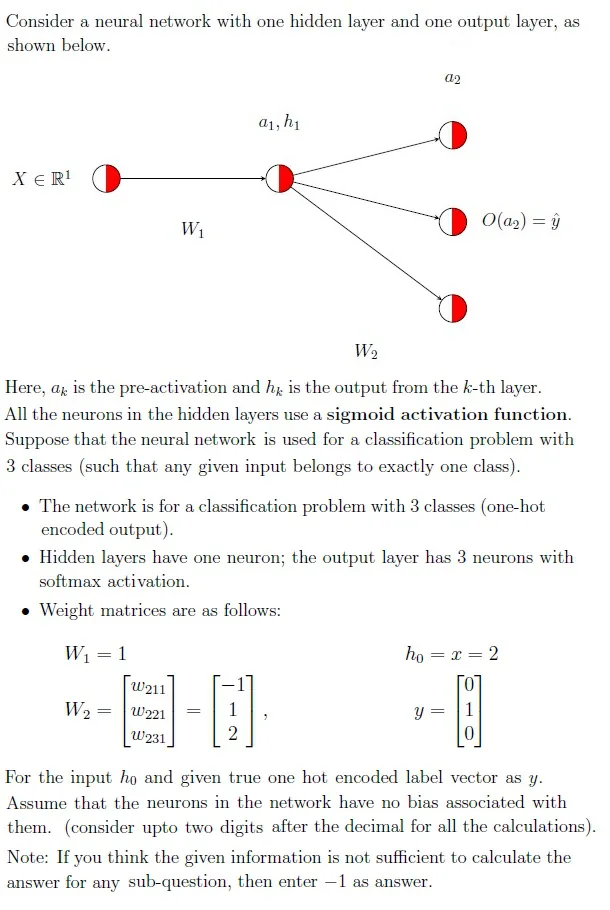
Based on the above data, answer the given subquestions.
Q9NAT1 Mark·Write the numberWhat is the value of the output of the hidden layer? (Answer correct upto two digits after the decimal)
Your answer:- Q10NAT1 Mark·Write the number
What is the value of the cross entropy loss? (use natural log). (Answer correct upto two digits after the decimal)
Your answer: - Q11NAT2 Marks·Write the number
 Your answer:
 - Q12NAT2 Marks·Write the number
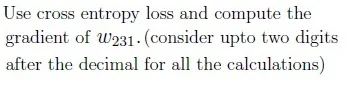
Use cross entropy loss and compute the gradient of W_1 which is the weight between input and hidden layer. (consider upto two digits after the decimal for all the calculations)
Your answer: Read the passage below, then answer Q13–Q16
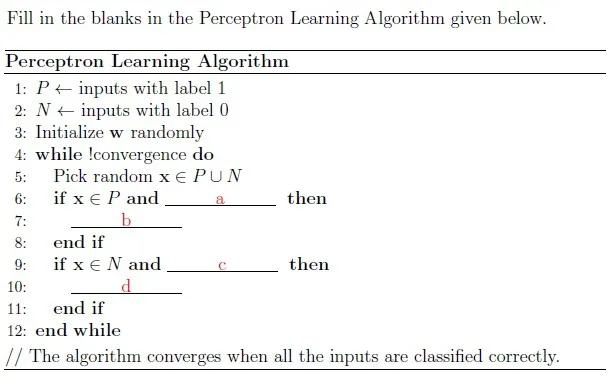
Based on the above data, answer the given subquestions.
Q13MCQ1 Mark·Choose one option
- A
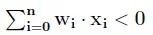
- B
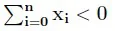
- C
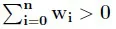
- D
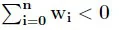
- A
- Q14MCQ1 Mark·Choose one option

- A

- B
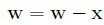
- C

- D

- A
- Q15MCQ1 Mark·Choose one option

- A
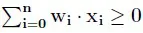
- B
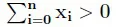
- C
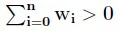
- D
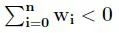
- A
- Q16MCQ1 Mark·Choose one option

- A
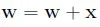
- B
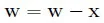
- C

- D

- A
Read the passage below, then answer Q17–Q18
Suppose you build a neural network with one hidden layer that uses sigmoid as an activation function and an output layer with a softmax activation function. You initialize the hidden layer weights W_1 randomly and set the output layer weights W_2 to all zeros. Assume the bias is set to be zero. You train the network using stochastic gradient descent.
Based on the above data, answer the given subquestions.
Q17MCQ2 Marks·Choose one optionAfter one iteration of gradient descent, will the new weight for W_1 be the same as the previous weight?
- AYes
- BNo
- Q18MCQ2 Marks·Choose one option
After one iteration of gradient descent, will the new weight for W_2 be the same as the previous weight?
- AYes
- BNo
End Term · 31 Aug 2025 (FN)End Term
- Q19MCQ2 Marks·Choose one option
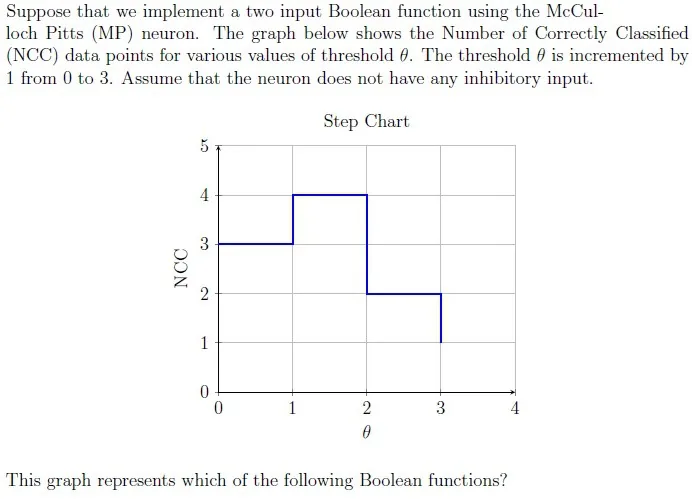
- AXOR
- BAND
- COR
- DNAND
- ENone of these
- Q20MCQ2 Marks·Choose one option
Based on the two statements provided choose the correct option? Statement 1: Optimization’s primary goal is to reduce the training error. Statement 2: Regularization helps to prevent overfitting, which in turn reduces the training error.
- ABoth Statement 1 and Statement 2 are false.
- BStatement 1 is true, but Statement 2 is false.
- CStatement 1 is false, but Statement 2 is true.
- DBoth Statement 1 and Statement 2 are true.
- Q21MCQ2 Marks·Choose one option
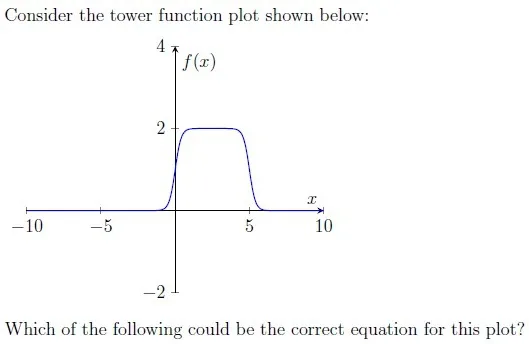
- A

- B

- C

- D

- A
- Q22MSQ3 Marks·Choose all correct options
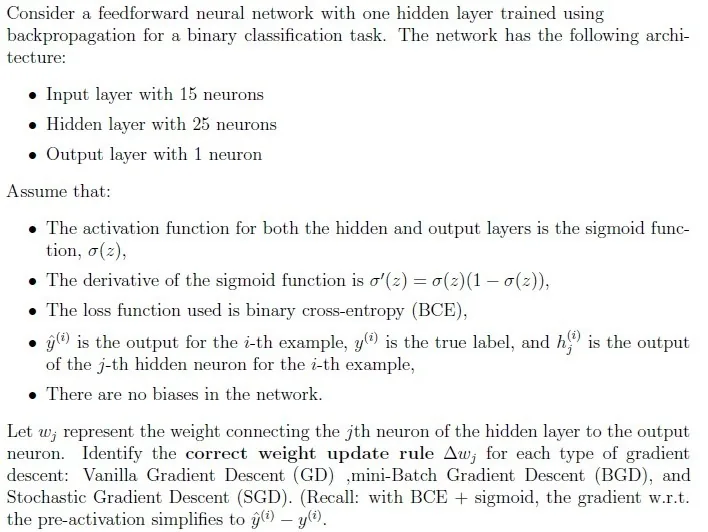
- A

- B

- C

- D

- E

- F

- A
Read the passage below, then answer Q23–Q25
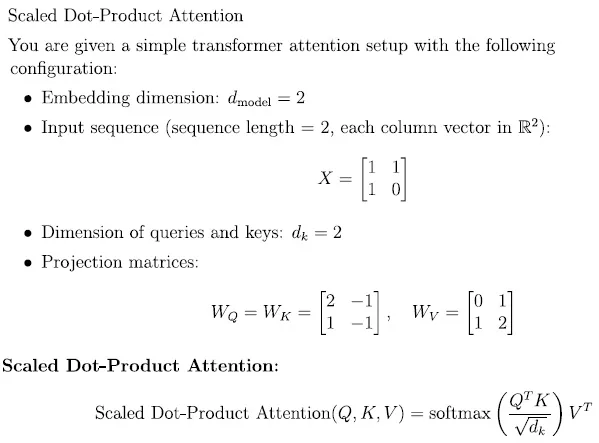
Based on the above data, answer the given subquestions.
Q23NAT3 Marks·Write the number Your answer:
- Q24NAT3 Marks·Write the number
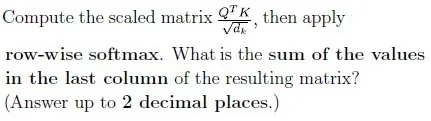 Your answer:
 - Q25NAT2 Marks·Write the number
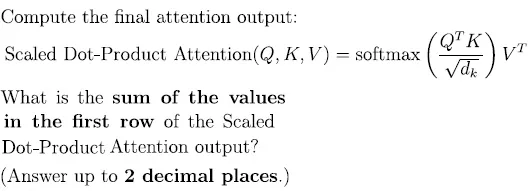 Your answer:
 Read the passage below, then answer Q26–Q28
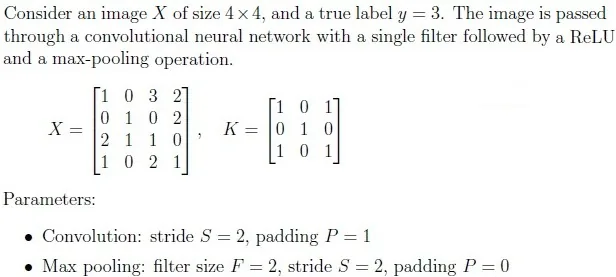
Based on the above data, answer the given subquestions.
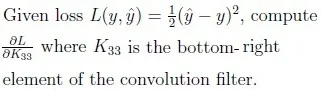
Q26MCQ2 Marks·Choose one optionWhat is the output of the convolution layer after applying ReLU?
- A

- B

- C

- D

- A
- Q27NAT1 Mark·Write the number
 Your answer:
 - Q28NAT2 Marks·Write the number
 Your answer:
 Read the passage below, then answer Q29–Q31
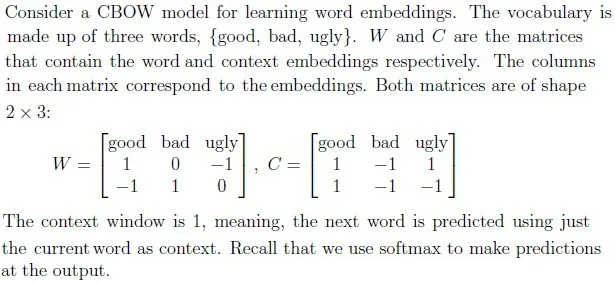
Based on the above data, answer the given subquestions.
Q29NAT2 Marks·Write the number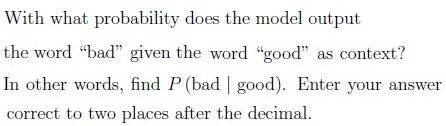 Your answer:
- Q30MCQ2 Marks·Choose one option
The CBOW model is now used to generate a “sentence” or a string of words. First we pass the word “good” and retain the word with highest probability as the output, say word_1, which is in turn passed as input to the model. If the model is run this way for exactly three time steps, what is the sentence that it outputs? Note that the sentence here is “word_1 word_2 word_3”.
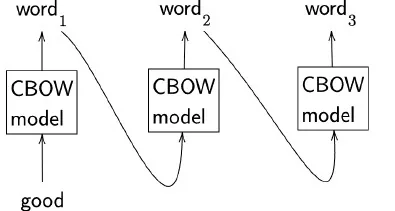
- Abad ugly good
- Bgood bad ugly
- Cbad bad bad
- Dgood good good
- Ebad ugly bad
- Q31MCQ3 Marks·Choose one option
Now consider updating the word embeddings using the sample “good good”. The first “good” in the string is used as context and the second “good” as the true label. Use cross entropy as the loss function and run one iteration of gradient descent with η = 1 starting with the existing values for the embeddings. Find the updated word embedding for “good” and choose the most appropriate option from below. Note that you have to compute the updated word embedding for “good” and not its context embedding.
- A(1.76, -0.24)
- B(1.24, -0.76)
- C(1.76, 1.76)
- D(1.76, -1.76)
- E(1.24, -1.24)
Read the passage below, then answer Q32–Q35
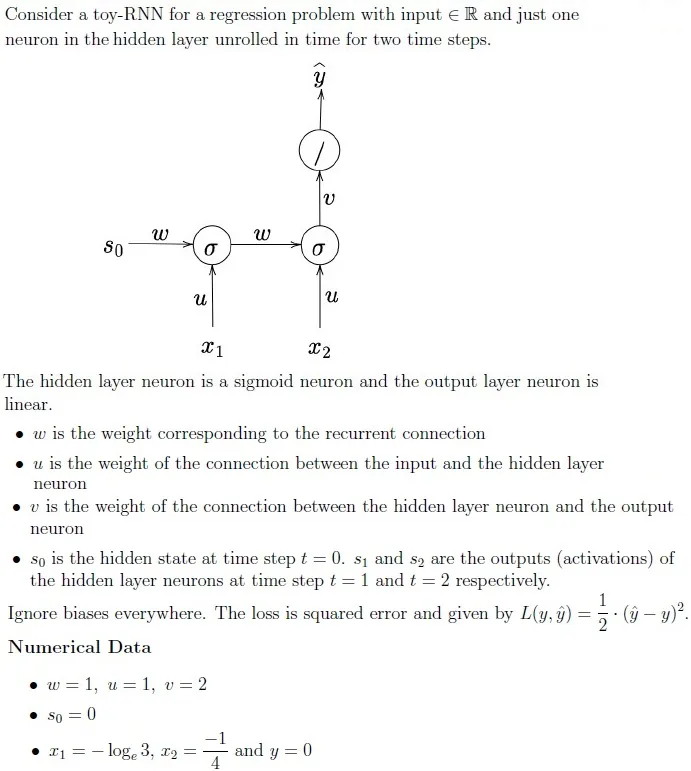
Based on the above data, answer the given subquestions.
Q32NAT1 Mark·Write the numberFind s1.
Your answer:- Q33NAT2 Marks·Write the number
Find s2.
Your answer: - Q34NAT1 Mark·Write the number
 Your answer:
 - Q35NAT3 Marks·Write the number
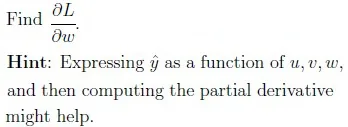 Your answer:
 Read the passage below, then answer Q36–Q37
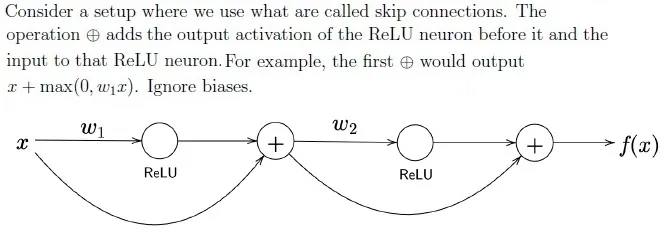
Based on the above data, answer the given subquestions.
Q36NAT2 Marks·Write the number Your answer:
- Q37NAT2 Marks·Write the number
 Your answer:
End Term · 31 Aug 2025 (AN)End Term
- Q38MCQ2 Marks·Choose one option
Consider the following two statements regarding model performance: Statement 1: A model achieving zero training loss is guaranteed to perform well on unseen data. Statement 2: Incorporating a regularization term in the loss function may lead to higher training loss but lower generalization error. Which of the following options is correct?
- ABoth Statement 1 and Statement 2 are true.
- BStatement 1 is true, but Statement 2 is false.
- CNone of these.
- DStatement 1 is false, but Statement 2 is true.
- Q39MCQ2 Marks·Choose one option
How does unsupervised layerwise pretraining help in alleviating the vanishing gradient problem?
- AIt allows the network to learn a better representation of the data in each layer, which leads to better- initialized weights for subsequent supervised training.
- BIt adds skip connections to the network, which are then removed before the supervised training.
- CIt replaces the sigmoid functions with ReLU functions during the pretraining phase.
- DIt regularizes the network’s weights, making them smaller and less likely to cause the gradients to explode.
- Q40MSQ2 Marks·Choose all correct options
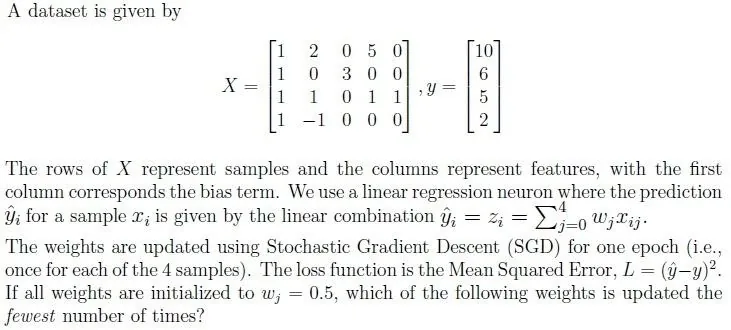
- A

- B

- C

- D

- E

- A
- Q41NAT3 Marks·Write the number
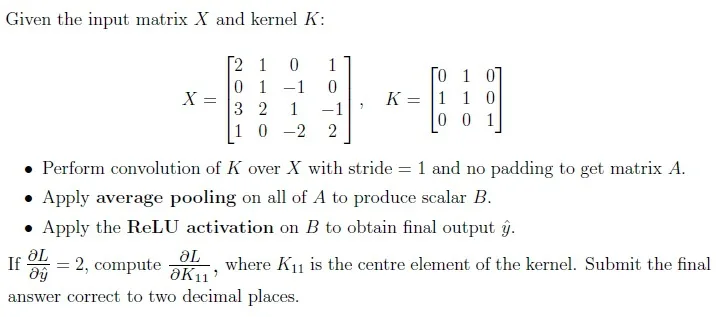 Your answer:
 Read the passage below, then answer Q42–Q44
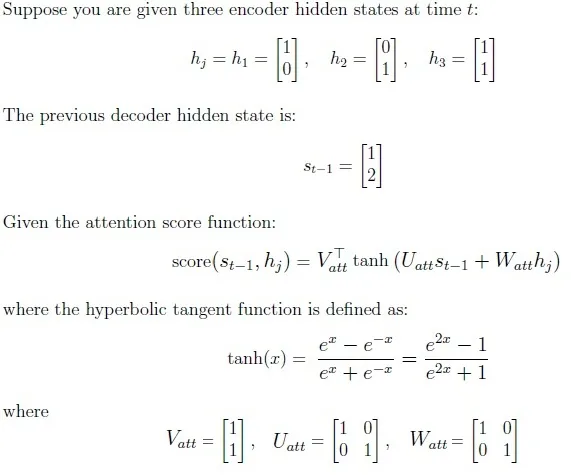
Based on the above data, answer the given subquestions.
Q42NAT2 Marks·Write the number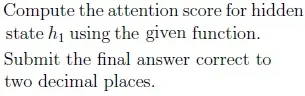 Your answer:
- Q43NAT4 Marks·Write the number
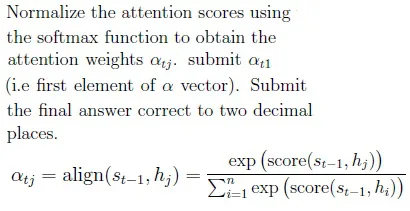 Your answer:
 - Q44NAT2 Marks·Write the number
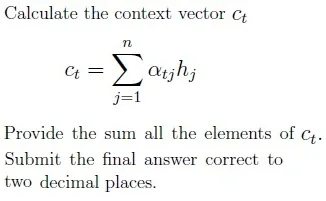 Your answer:
 Read the passage below, then answer Q45–Q47
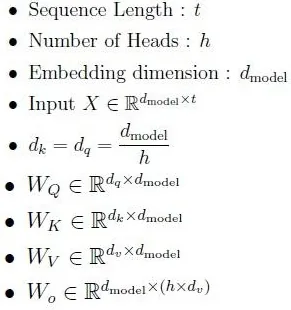
Based on the above data, answer the given subquestions.
Q45NAT2 Marks·Write the number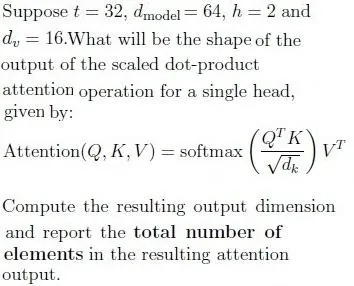 Your answer:
- Q46NAT2 Marks·Write the number
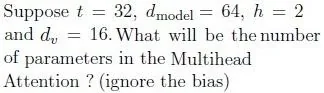 Your answer:
 - Q47NAT1 Mark·Write the number
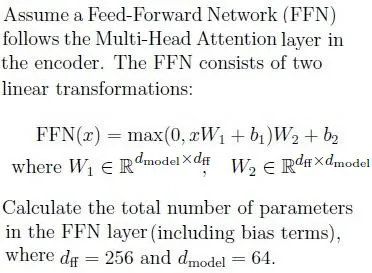 Your answer:
 Read the passage below, then answer Q48–Q50
Consider a CBOW model for learning word embeddings. The vocabulary is made up of three words, {good, bad, ugly}. W and C are the matrices that contain the word and context embeddings respectively. The columns in each matrix correspond to the embeddings. Both matrices are of shape 2 x 3:

The context window is 1, meaning, the next word is predicted using just the current word as context. Recall that we use softmax to make predictions at the output.
Based on the above data, answer the given subquestions.
Q48NAT2 Marks·Write the number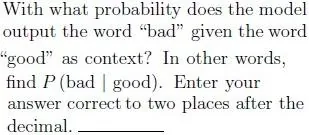 Your answer:
- Q49MCQ2 Marks·Choose one option
The CBOW model is now used to generate a “sentence” or a string of words. First we pass the word “good” and retain the word with highest probability as the output, say word_1, which is in turn passed as input to the model. If the model is run this way for exactly three time steps, what is the sentence that it outputs? Note that the sentence here is “word_1 word_2 word_3”.
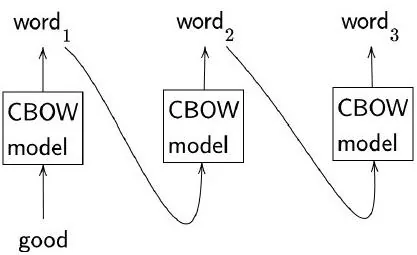
- Abad ugly good
- Bgood bad ugly
- Cbad bad bad
- Dgood good good
- Ebad ugly bad
- Q50MCQ3 Marks·Choose one option
Now consider updating the word embeddings using the sample “good good”. The first “good” in the string is used as context and the second “good” as the true label. Use cross entropy as the loss function and run one iteration of gradient descent with η = 1 starting with the existing values for the embeddings. Find the updated word embedding for “good” and choose the most appropriate option from below. Note that you have to compute the updated word embedding for “good” and not its context embedding.
- A(1.76, -0.24)
- B(1.24, -0.76)
- C(1.76, 1.76)
- D(1.76, -1.76)
- E(1.24, -1.24)
Read the passage below, then answer Q51–Q54
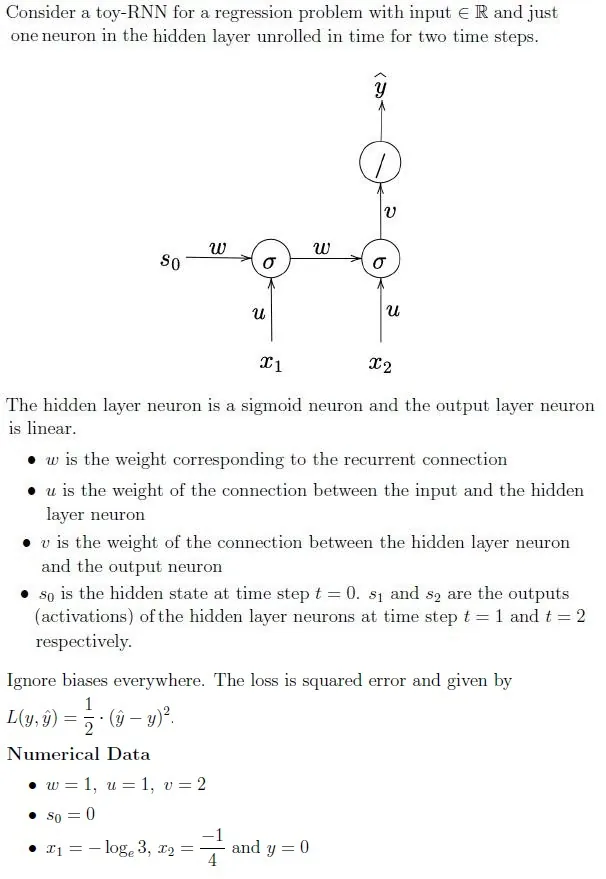
Based on the above data, answer the given subquestions.
Q51NAT1 Mark·Write the number Your answer:
- Q52NAT2 Marks·Write the number
 Your answer:
 - Q53NAT1 Mark·Write the number
 Your answer:
 - Q54NAT3 Marks·Write the number
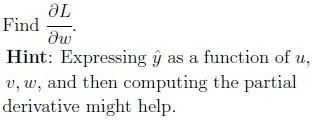 Your answer:
 Read the passage below, then answer Q55–Q56
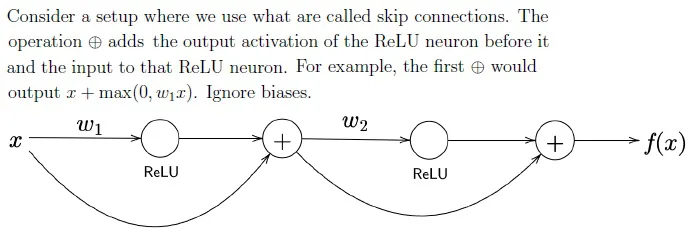
Based on the above data, answer the given subquestions.
Q55NAT2 Marks·Write the number Your answer:
- Q56NAT2 Marks·Write the number
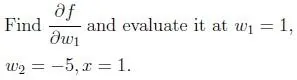 Your answer:
Quiz 2 · 3 Aug 2025 (AN)Quiz 2
- Q57MCQ3 Marks·Choose one option
Consider four training experiments, each involving a neural network trained on the same dataset for 50 epochs using gradient descent. The loss curves for these models are shown below. The model obtained at the end of 50 epochs is retained in each of the four cases. The solid curve is the training loss and the dashed curve is the validation loss.
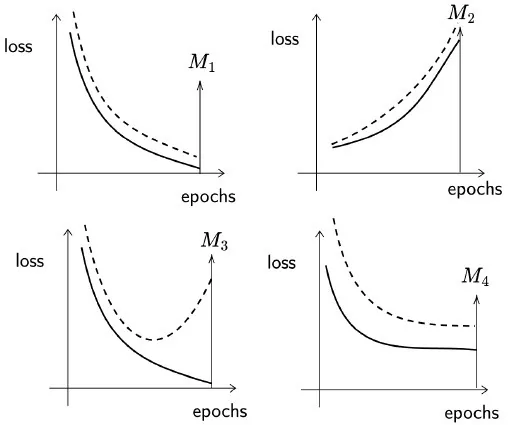 Now consider these four statements.
(A) Learning rate used is too high
(B) Low bias and high variance
(C) Low bias and low variance
(D) High bias and low variance
Choose the most appropriate pairing of models with the statements.
Now consider these four statements.
(A) Learning rate used is too high
(B) Low bias and high variance
(C) Low bias and low variance
(D) High bias and low variance
Choose the most appropriate pairing of models with the statements.- A

- B

- C

- D

- A
- Q58MSQ3 Marks·Choose all correct options
Which of the following optimizers use an adaptive learning rate?
- AADAM
- BRMSprop
- CMomentum based GD
- DNesterov accelerated gradient descent
- Q59NAT2 Marks·Write the number
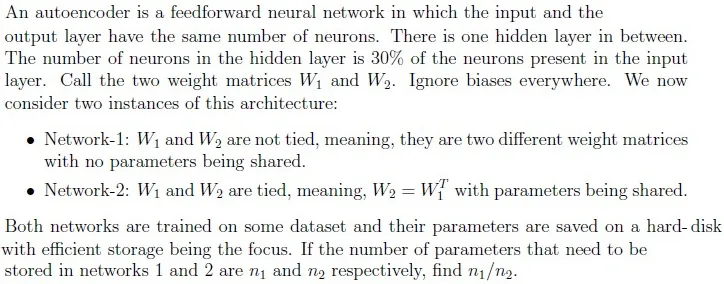 Your answer:
 - Q60NAT4 Marks·Write the number
 Your answer:
 Read the passage below, then answer Q61–Q63
The input volume to a convolutional layer of a CNN has shape 64 × 64 × 8, where 8 is the depth or the number of channels. The conv-layer has 16 kernels each of spatial extent 5 × 5. The stride is 1 and padding is 2. Ignore biases.
Based on the above data, answer the given subquestions.
Q61MCQ3 Marks·Choose one optionWhich of these is the shape of the output volume after the convolution operation?
- A64 × 64 × 16
- B62 × 62 × 16
- C64 × 64 × 8
- D32 × 32 × 8
- E32 × 32 × 16
- Q62NAT3 Marks·Write the number
Find the total number of parameters associated with the convolutional layer.
Your answer: - Q63MCQ3 Marks·Choose one option
If the input volume to the convolutional layer is 128 × 128 × 8, would the number of parameters associated with the conv layer change?
- AYes, it will double.
- BYes, it will halve.
- CYes, it will quadrapule.
- DNo, it will remain the same.
Read the passage below, then answer Q64–Q66
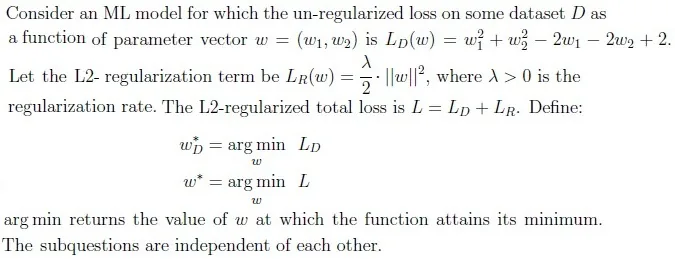
Based on the above data, answer the given subquestions.
Q64MCQ3 Marks·Choose one option
- A(1, 1)
- B(0, 0)
- C(−1,−1)
- D(1,−1)
- E(−1, 1)
- Q65NAT3 Marks·Write the number
 Your answer:
 - Q66MCQ3 Marks·Choose one option
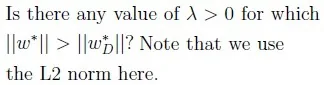
- AYes, there is at least one such value for which this happens.
- BYes, there are infinitely many values for which this happens.
- CYes, there are finitely many values from which this happens.
- DNo, there is no such λ> 0 for which this happens.
Read the passage below, then answer Q67–Q69
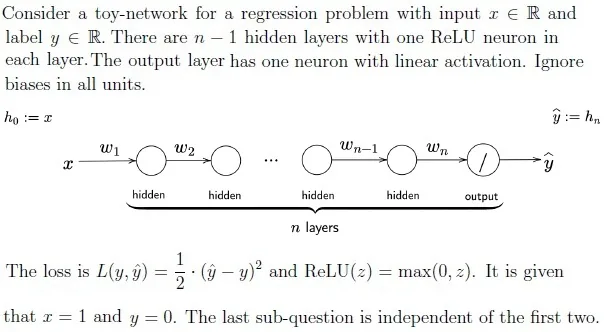
Based on the above data, answer the given subquestions.
Q67MCQ3 Marks·Choose one option
- A

- B

- C

- A
- Q68MCQ3 Marks·Choose one option
- A

- B

- C

- D

- E

- A
- Q69MCQ4 Marks·Choose one option
- A

- B

- C

- A
Read the passage below, then answer Q70–Q72
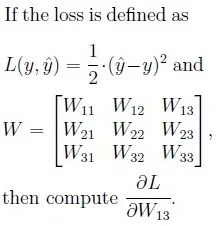
For a regression problem, consider an image X of size 4×4 and true label y that is passed through a toy convolutional network that has one convolutional layer with a single kernel followed by a max- pooling layer. Ignore the bias.
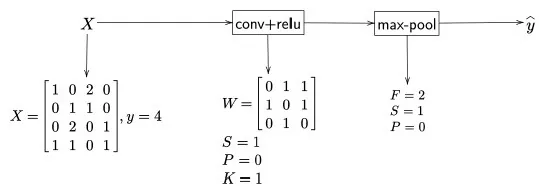
W denotes the kernel. S is the stride. P is the padding and K is the number of kernels. F is the spatial extent of the kernel for the max-pooling operation.
Based on the above data, answer the given subquestions.
Q70MCQ3 Marks·Choose one optionWhich of the following is the output produced by the conv+relu layer?
- A

- B

- C

- D

- A
- Q71NAT3 Marks·Write the number
 Your answer:
 - Q72NAT4 Marks·Write the number
 Your answer:
End Term · 13 Apr 2025 (AN)End Term
- Q73MCQ1 Mark·Choose one option
A neural network is being trained for a regression problem in which the target is in the interval (−1, 1). Which of the following is NOT a good choice for the activation function at the output layer?
- AReLU
- BLinear (identity)
- CTanh
- Q74MCQ3 Marks·Choose one option
In the transformer architecture, which of the following are true regarding cross attention in the decoder?
- AThe query vectors come from the decoder stack, while the key and value vectors come from the encoder stack.
- BThe query and value vectors come from the decoder stack, while the key vectors come from the encoder stack.
- CThe query, key and value vectors come from the decoder stack.
- DThe query, key and value vectors come from the encoder stack.
- Q75MSQ2 Marks·Choose all correct options
Consider applying dropout to a hidden layer with p = 0.5. Which of the following are true?
- ADuring training, a randomly chosen set of neurons in the layer are dropped out. The neurons to be dropped are determined dynamically during each iteration.
- BDuring inference (testing), no neurons are dropped out. Instead, the activation of each neuron in the layer is scaled by 0.5.
- CDuring training, a fixed set of neurons in the layer are dropped out. This set remains the same in every iteration and the neurons to be dropped are determined before the training begins.
- DDuring inference (testing), a randomly chosen set of neurons in the layer are dropped out.
- Q76MSQ3 Marks·Choose all correct options
Consider the following plot of error versus model complexity. Models of varying complexity are evaluated on the same training and test datasets. Model complexity increases from left to right:
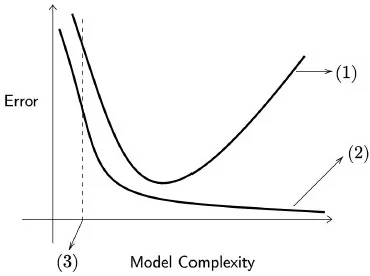 Select all true options.
- A(1) corresponds to the test error.
- B(2) corresponds to the training error.
- C(3) corresponds to a model with high bias and low variance.
- D(1) corresponds to the training error.
- E(2) corresponds to the test error.
- F(3) corresponds to a model with low bias and high variance.
- Q77MSQ3 Marks·Choose all correct options
Consider the following tasks which can be solved using an encoder-decoder architecture. Which of these tasks has a decoder where an RNN is not necessary?
- AVideo classification: outputs a single class label
- BSentiment analysis: outputs a single class label
- CDocument summarization: outputs a sequence of text
- DMachine translation: outputs a sequence of text
- EVideo captioning: outputs a sequence of text
- Q78NAT3 Marks·Write the number
The input volume to a convolutional layer is 100×100×5. If ten kernels, each of size 9 × 9, with unit stride are applied over this volume, what should be the padding so that the output volume has dimensions 100 × 100 × 10? Note that you should enter the value of P as per the convention we have been following.
Your answer: Read the passage below, then answer Q79–Q80
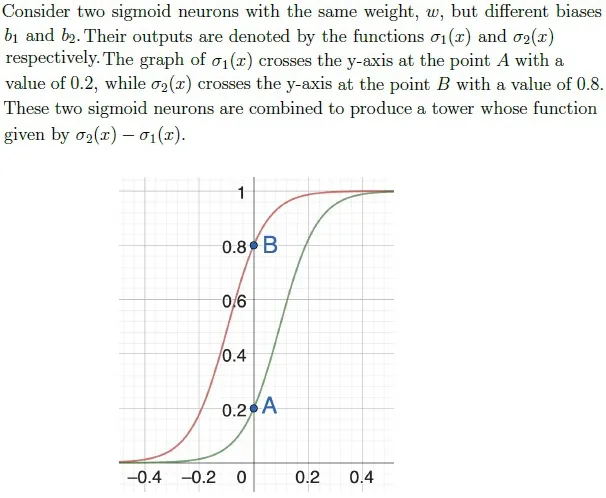
Based on the above data, answer the given subquestions.
Q79NAT2 Marks·Write the numberFind the value of x at which the tower attains its maximum value.
Your answer:- Q80NAT1 Mark·Write the number
Find the maximum value that the tower attains.
Your answer: Read the passage below, then answer Q81–Q83
Consider the multi-head self-attention mechanism in the encoder of a transformer with 8 heads. The word embedding dimension is 32. In a given head, the query, key and value vectors have the same dimension and each of them is 4. The sequence length is 5.
Based on the above data, answer the given subquestions.
Q81MCQ1 Mark·Choose one optionIn any given head, what is the dimension of the W_Q matrix?
- A32 × 4
- B32 × 32
- C4 × 4
- D32 × 8
- E5 × 5
- Q82MCQ1 Mark·Choose one option
In any given head, what is the dimension of the query-key product matrix?
- A5 × 5
- B4 × 4
- C8 × 8
- D32 × 32
- Q83NAT1 Mark·Write the number
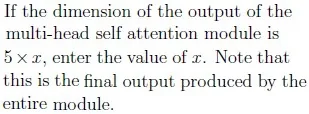 Your answer:
 Read the passage below, then answer Q84–Q86
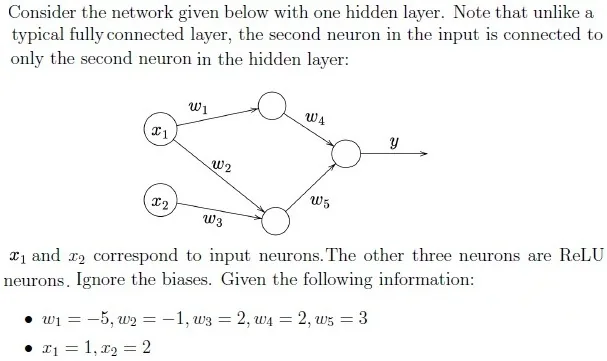
Based on the above data, answer the given subquestions.
Q84NAT1 Mark·Write the numberFind the value y at the end of the forward pass.
Your answer:- Q85NAT1 Mark·Write the number
 Your answer:
 - Q86NAT1 Mark·Write the number
 Your answer:
 Read the passage below, then answer Q87–Q89

Based on the above data, answer the given subquestions.
Q87MCQ1 Mark·Choose one option
- A

- B

- C

- D

- A
- Q88MCQ1 Mark·Choose one option
- A

- B

- C

- D

- A
- Q89MCQ1 Mark·Choose one option
Which of the following is true?
- AThe mask matrix is added to the query-key product matrix before applying softmax.
- BThe mask matrix is added to the query-key product matrix after applying softmax.
- CThe mask matrix could be added either before or after the softmax.
Read the passage below, then answer Q90–Q92

Based on the above data, answer the given subquestions.
Q90NAT1 Mark·Write the numberFind a.
Your answer:- Q91NAT1 Mark·Write the number
Find b.
Your answer: - Q92NAT1 Mark·Write the number
Find c.
Your answer: Read the passage below, then answer Q93–Q94
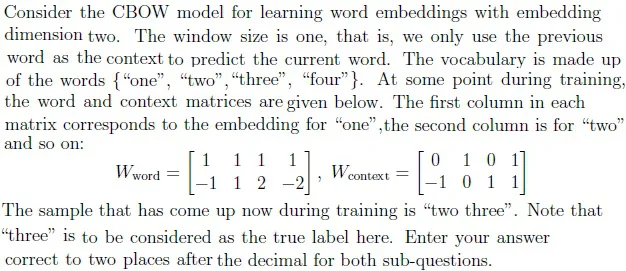
Based on the above data, answer the given subquestions.
Q93NAT2 Marks·Write the numberFind the probability of predicting “three” given “two” as context.
Your answer:- Q94NAT2 Marks·Write the number
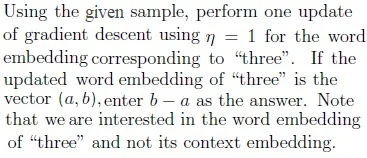 Your answer:
 Read the passage below, then answer Q95–Q97
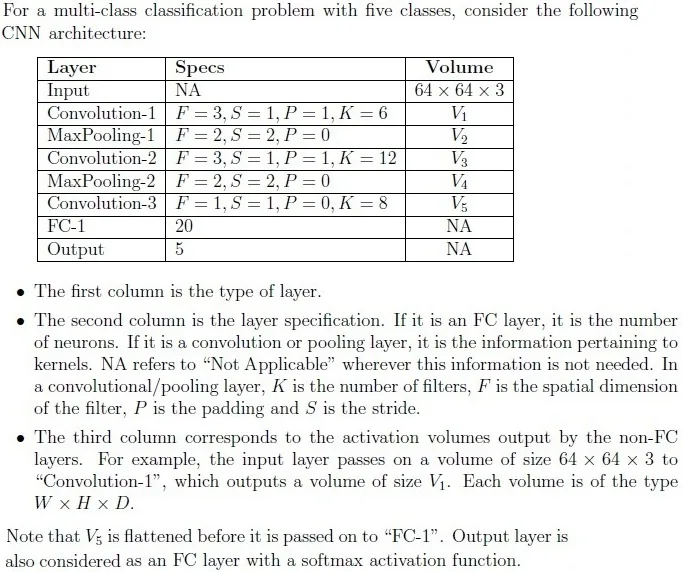
Based on the above data, answer the given subquestions.
Q95NAT1 Mark·Write the numberFind the number of parameters associated with the layer “Convolution-2” that are required to transform V_2 to V_3. Ignore biases.
Your answer:- Q96MCQ1 Mark·Choose one option
Which of the following corresponds to V_4, the activation volume output by the layer “MaxPooling- 2”?
- A16 × 16 × 12
- B8 × 8 × 12
- C32 × 32 × 8
- D16 × 16 × 6
- Q97MCQ2 Marks·Choose one option
The parameters associated with the fully connected layers, namely “FC- 1” and “Output”, represent what percentage of the total number of parameters in the network? The answer should be rounded off to the nearest integer. Ignore biases.
- A98%
- B85%
- C50%
- D10%
Read the passage below, then answer Q98–Q100
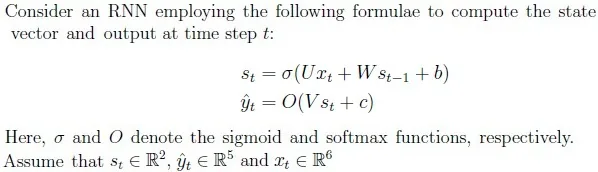
Based on the above data, answer the given subquestions.
Q98NAT2 Marks·Write the numberWith a total of 7 time steps (T = 7), what is the total count of parameters (including bias) within the network?
Your answer:- Q99MCQ2 Marks·Choose one option
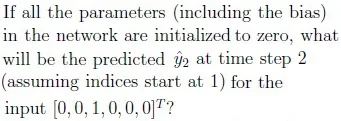
- A

- B

- C

- D

- A
- Q100NAT2 Marks·Write the number
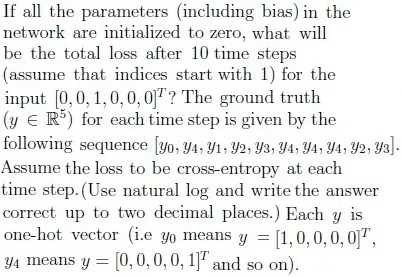 Your answer:
 Read the passage below, then answer Q101–Q103
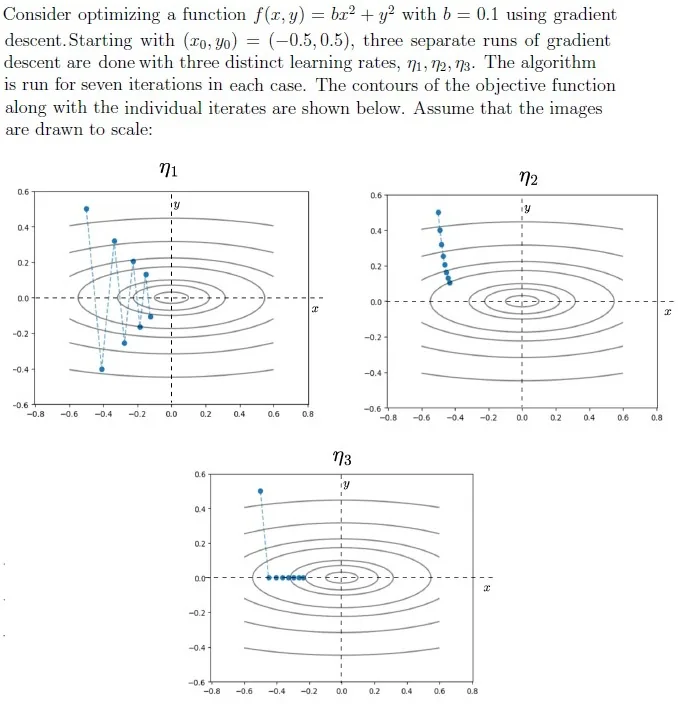
Based on the above data, answer the given subquestions.
Q101MCQ2 Marks·Choose one optionWhich of these is the correct ordering among the learning rates?
- A
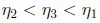
- B

- C
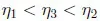
- D

- A
- Q102MCQ2 Marks·Choose one option

- A0.5
- B0.9
- C0.1
- D1
- Q103NAT2 Marks·Write the number
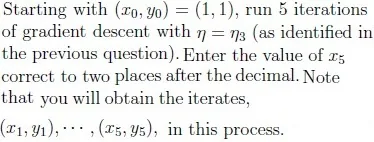 Your answer:
Official KeyMaster Answer Key & Explanations
Official answer keys from IIT Madras BS past papers. Click any question to review.
Reveal KeyCollapse Key
Master Answer Key & Explanations
Official answer keys from IIT Madras BS past papers. Click any question to review.