Indian Institute of Technology Madras
BS Degree Programme · Examination & Study Paper
Algorithmic Thinking in Bioinformatics
End Term · 31 Aug 2025 (Forenoon)
Examination Instructions & Guidelines
- Solve on notebook/paper first before checking solutions.
- MCQ: Exactly 1 option is correct. Negative marking applies.
- MSQ: One or more options correct. Select all to score.
- NAT: Numerical response. No negative marking.
- Scientific calculator allowed for all calculations.
- Official answer key is sealed at the end of this sheet.
- Q1MCQ5 Marks·Choose one option
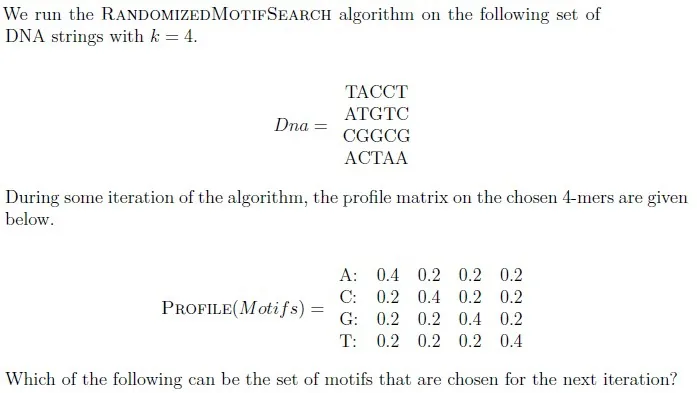
- ATACC, ATGT, CGGC, ACTA
- BACCT, TGTC, GGCG, CTAA
- CTACC, TGTC, GGCG, CTAA
- DACCT, ATGT, CGGC, ACTA
- Q2MCQ5 Marks·Choose one option
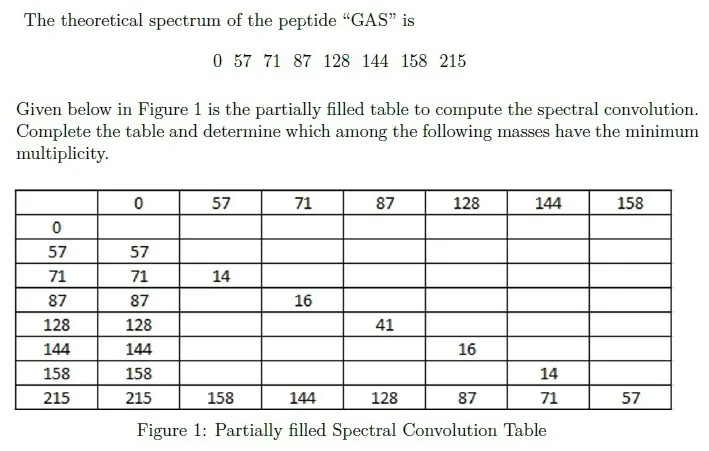
- A14
- B41
- C57
- D128
- Q3NAT5 Marks·Write the number
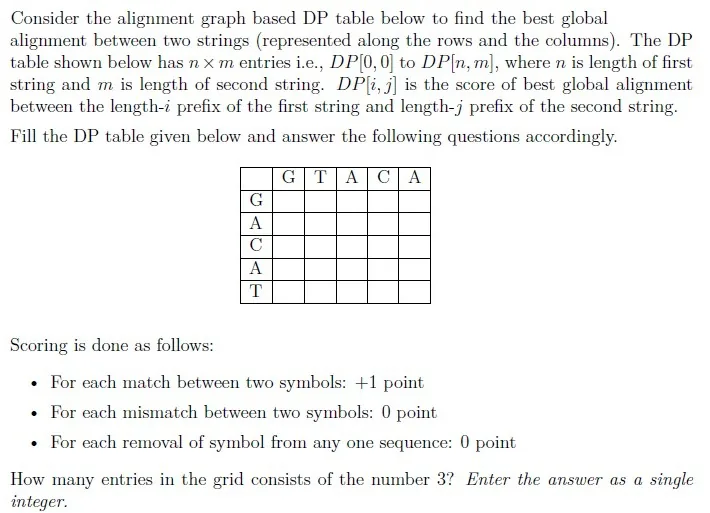 Your answer:
 - Q4NAT5 Marks·Write the number
 Your answer:
 - Q5NAT5 Marks·Write the number
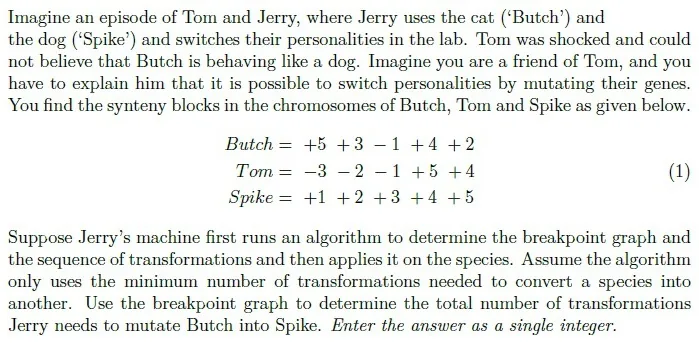 Your answer:
 Read the passage below, then answer Q6–Q7
The de Bruijn graph of some linear (i.e., non-circular) genome Dna comprises of 2 nodes (N_1 and N_2) and 3 edges – two of these edges are directed from N_1 to N_2 and the remaining edge is directed from N_2 to N_1. To reconstruct Dna, you are allowed to start only from the node N_1. Answer the given subquestions with respect to the same.
Q6NAT2 Marks·Write the numberIf the k-mers represented by both N_1 and N_2 are fixed, then how many unique genome sequences can be constructed from this de Bruijn graph? Enter the answer as a single integer.
Your answer:- Q7MSQ3 Marks·Choose all correct options
Suppose you don’t know the 2-mers representing N_1 and N_2. Then which of the following is/are possible choices for Dna?
- ATATAT
- BCACAC
- CATATA
- DAGAGG
- ETGTGG
Read the passage below, then answer Q8–Q9
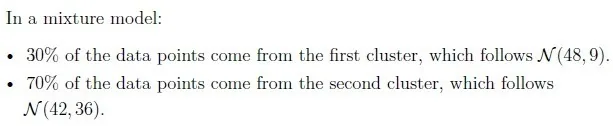
Based on the above data, answer the given subquestions.
Q8NAT3 Marks·Write the numberWhat is the value of the probability density function at x = 45 under this model? Round the answer to three decimal digits.
Your answer:- Q9NAT2 Marks·Write the number
What is the probability that this data point was generated by the first cluster? Round the answer to three decimal digits.
Your answer: Read the passage below, then answer Q10–Q12
You are asked to construct a phylogeny on the distance matrix D using the Additive Phylogeny algorithm. At the end of the 5th iteration, you notice the D^(bald) matrix consumes 81 units of memory space. Assume every entry in a matrix requires 1 unit of space. Also assume the count of the iterations starts from 1. Answer the given subquestions with respect to the same.
Q10NAT2 Marks·Write the numberHow many units of space is required to the corresponding D^(trimmed) matrix? Enter the answer as a single integer.
Your answer:- Q11NAT2 Marks·Write the number
How many leaves will be there in the final phylogeny constructed at the end of the algorithm? Enter the answer as a single integer.
Your answer: - Q12NAT1 Mark·Write the number
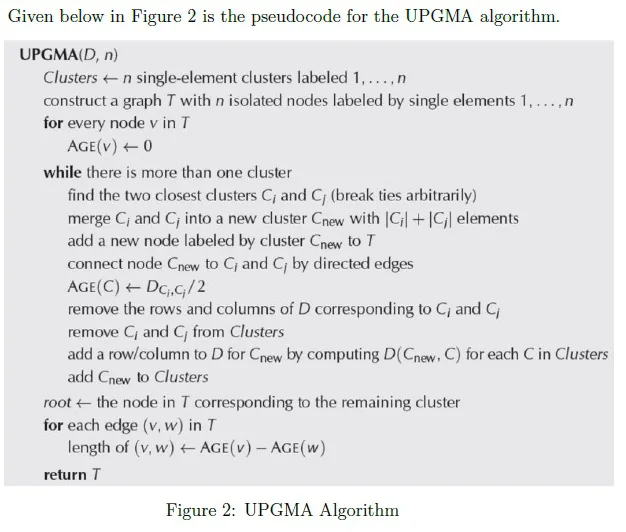 Read the pseudocode carefully and calculate the number of iterations required by the UPGMA algorithm to construct the Ultrametric tree on D? Enter the answer as a single integer.Your answer:
 Read the passage below, then answer Q13–Q14
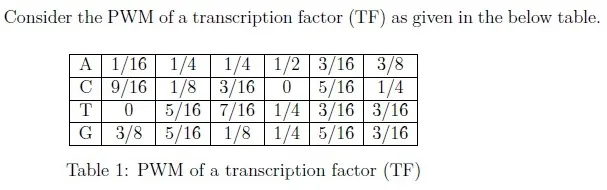
Based on the above data, answer the given subquestions.
Q13NAT4 Marks·Write the numberHow many 6-mers in the sequence ‘ATTCCGGCCAACAG’ have a nonzero probability of binding to the TF according to the PWM given in the table? Enter the answer as a single integer.
Your answer:- Q14MCQ4 Marks·Choose one option
Which of the following substrings is most likely to be bound by the TF?
- ATTCCGG
- BCCGGCC
- CATTCCG
- DCCAACA
Read the passage below, then answer Q15–Q16
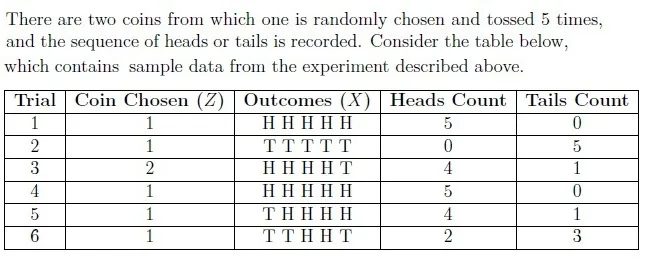
Based on the above data, answer the given subquestions.
Q15MCQ2 Marks·Choose one option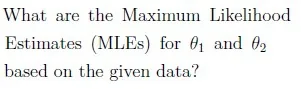
- A

- B

- C

- D

- A
- Q16MCQ3 Marks·Choose one option
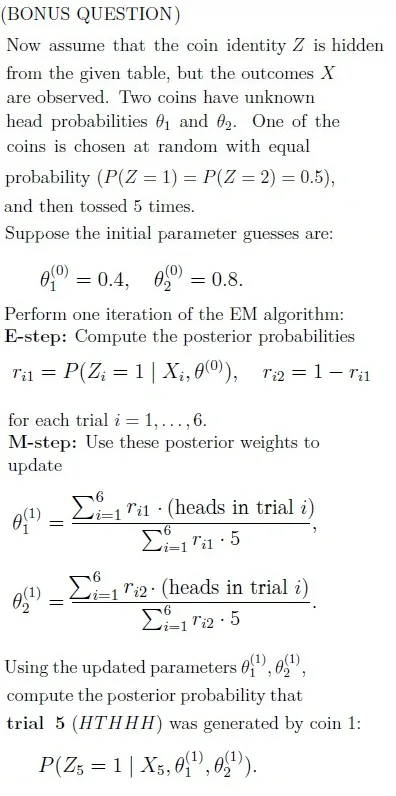
- A

- B

- C

- D

- A