Indian Institute of Technology Madras
BS Degree Programme · Examination & Study Paper
BSCS1001 · Computational Thinking
End Term · 31 Aug 2025 (Forenoon)
Examination Instructions & Guidelines
- Solve on notebook/paper first before checking solutions.
- MCQ: Exactly 1 option is correct. Negative marking applies.
- MSQ: One or more options correct. Select all to score.
- NAT: Numerical response. No negative marking.
- Scientific calculator allowed for all calculations.
- Official answer key is sealed at the end of this sheet.
- Q1MCQ5 Marks·Choose one option
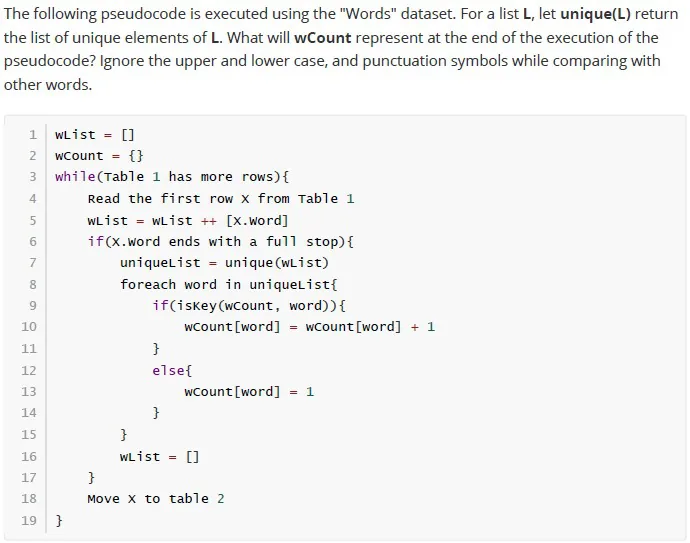
- ADictionary with words as keys mapped to the number of sentences in which the word is present.
- BDictionary with words as keys mapped to the frequency count of the word in the dataset.
- CDictionary with words as keys mapped to the maximum frequency of the word in a sentence.
- DDictionary with words as keys mapped to the number of sentences in which the word is present more than one time.
- Q2MCQ5 Marks·Choose one option
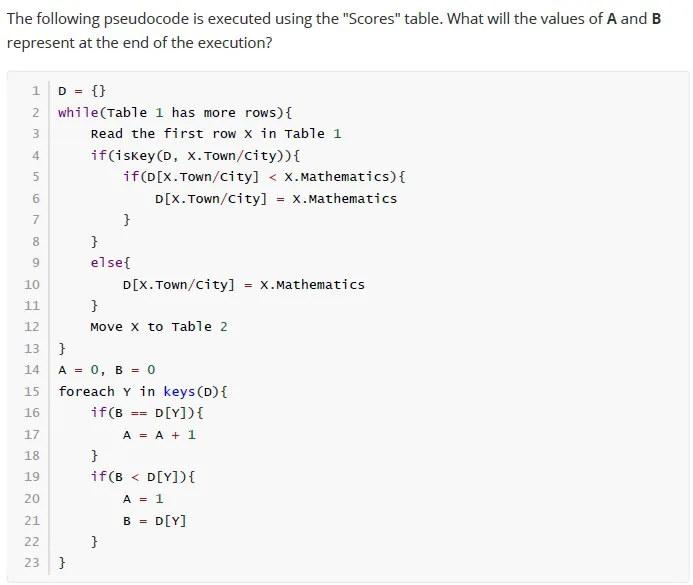
- AA = Number of cities where students have scored the highest marks in Mathematics B = The highest marks in Mathematics
- BA = Number of cities where students have scored the lowest marks in Mathematics B = The highest marks in Mathematics
- CA = Cities where students have scored the lowest marks in Mathematics B = The lowest marks in Mathematics
- DA = Number of cities with the highest Mathematics scores B = The lowest marks in Mathematics
- Q3MCQ5 Marks·Choose one option
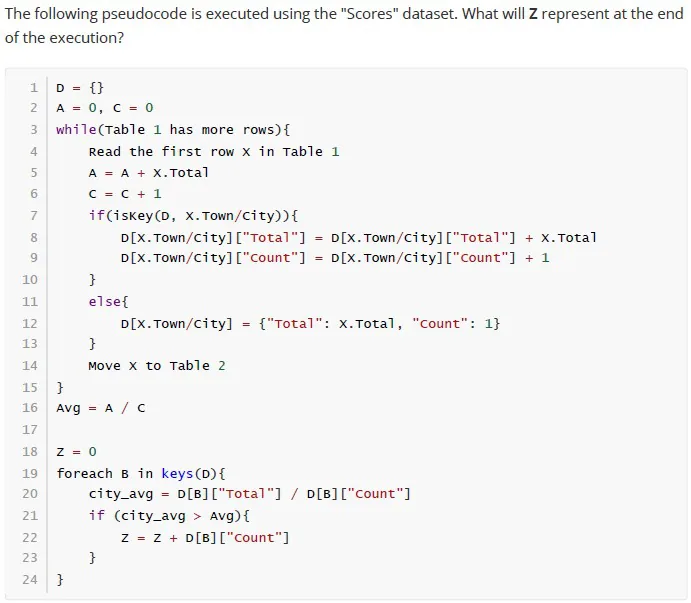
- ANumber of students from the cities with the average total marks of the city more than the average total marks of the dataset.
- BNumber of students from the cities with the average total marks of the city less than the average total marks of the dataset.
- CNumber of cities with the average total marks less than the average total marks of the dataset.
- DNumber of cities with the average total marks more than the average total marks of the dataset
- Q4MCQ5 Marks·Choose one option
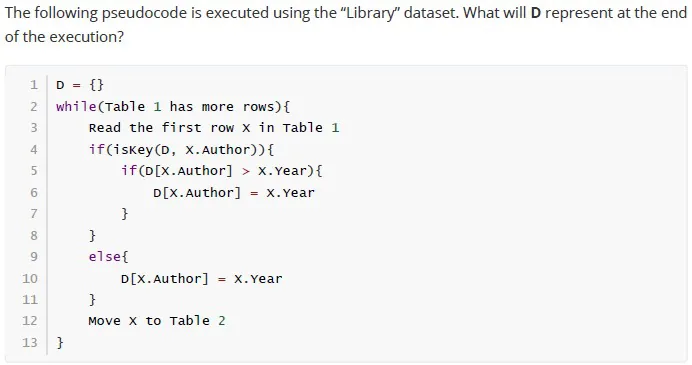
- ADictionary with authors as keys mapped to the year of publication of their latest book
- BDictionary with authors as keys mapped to the year of publication of their first book
- CDictionary with authors as keys mapped to the year of publication of their second book
- DDictionary with authors as keys mapped to the year of publication of their second latest book
- Q5MCQ5 Marks·Choose one option
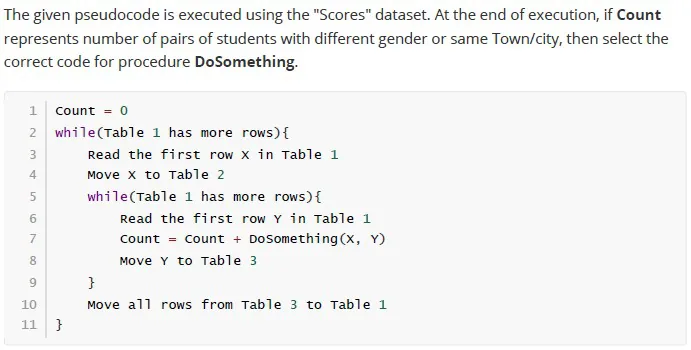
- A
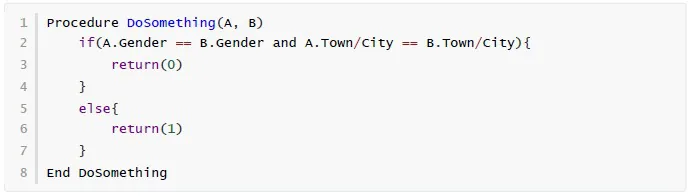
- B
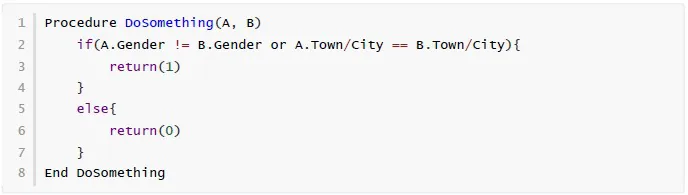
- C
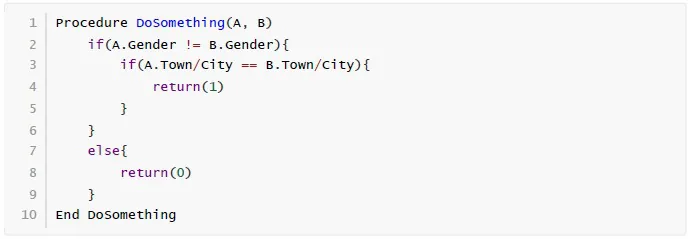
- D
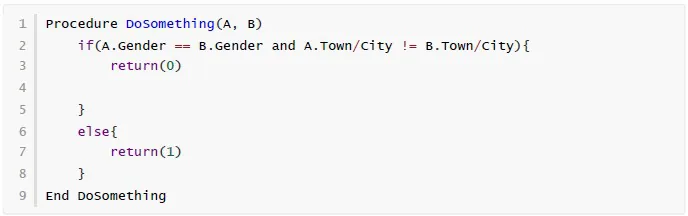
- A
- Q6MSQ5 Marks·Choose all correct options
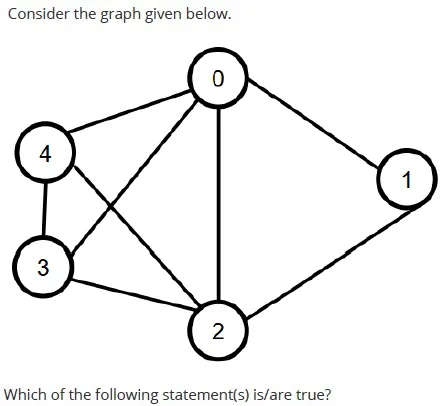
- AThere are 4 cliques of size three present in the graph.
- BThe nodes 0, 1, 2 and 4 form a clique of size four.
- CThe maximum size of clique that appears in the graph is 4.
- DThe nodes 0 and 1 form a clique of size two.
- Q7MSQ5 Marks·Choose all correct options
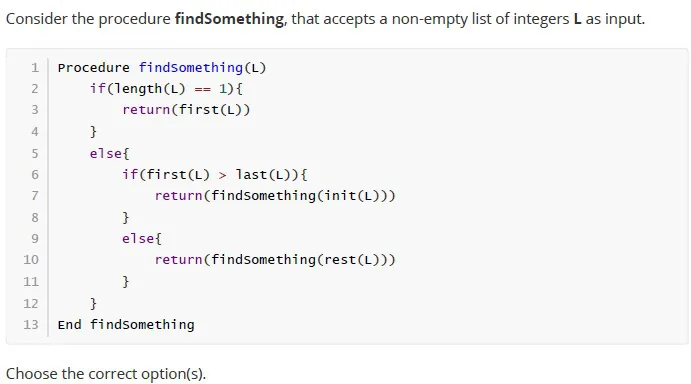
- A

- B

- C
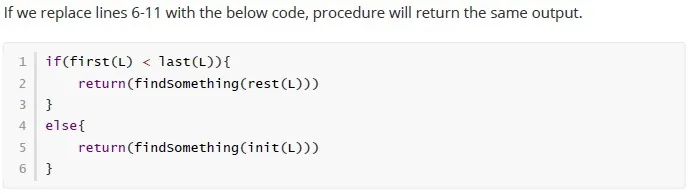
- D
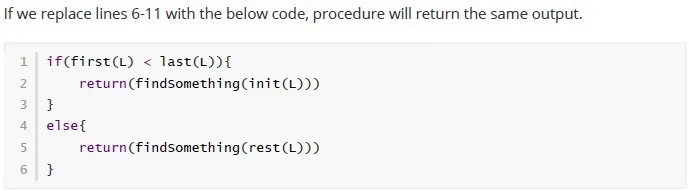
- A
- Q8MSQ5 Marks·Choose all correct options
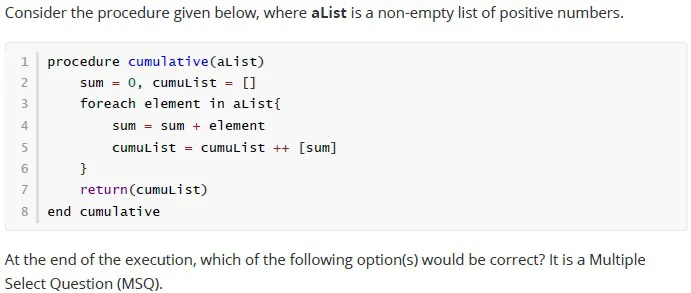
- AThe first element of both the lists, cumuList and aList, will be same.
- BNumber of elements in cumuList will be one lesser than that of aList.
- CcumuList is a list of numbers in increasing order.
- DNumber of elements in both lists, cumuList and aList, will be different.
- Q9MSQ5 Marks·Choose all correct options
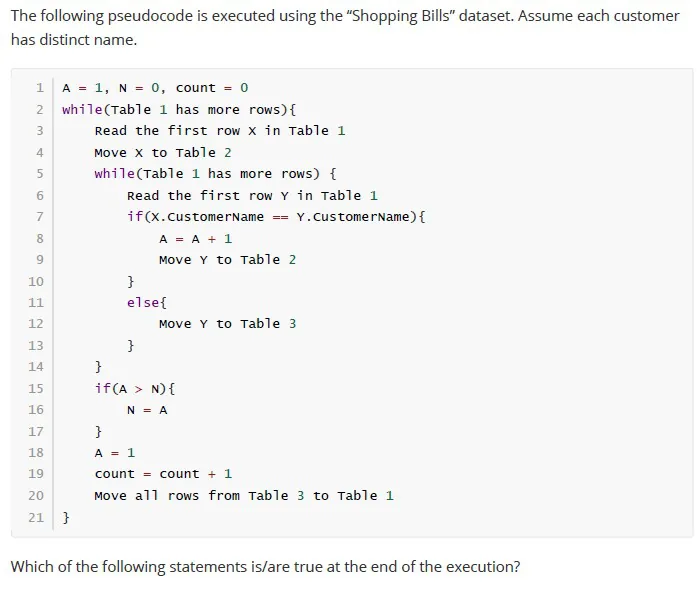
- AN represents maximum number of bills issued to a single customer.
- Bcount represents number of customers.
- CA represents maximum number of bills issued to a single customer.
- DN represents maximum number of bills issued to a single customer from the same shop.
- Q10MSQ6 Marks·Choose all correct options
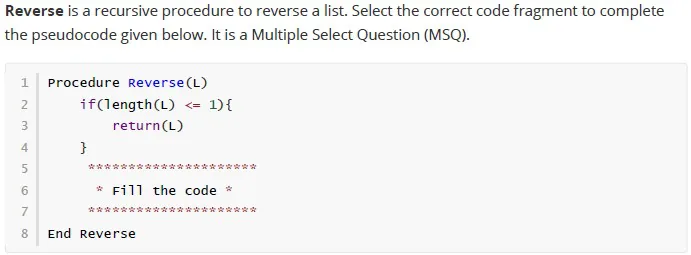
- A

- B

- C

- D

- A
- Q11NAT5 Marks·Write the number
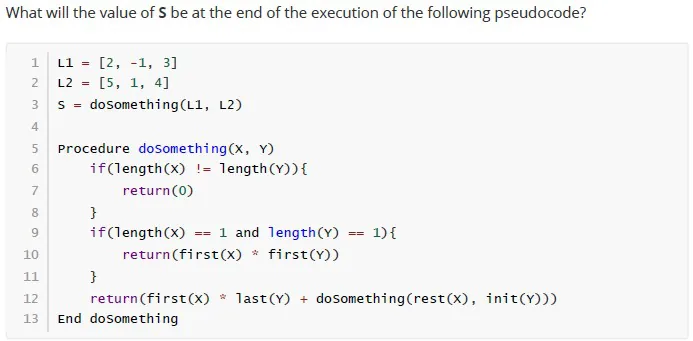 Your answer:
 - Q12NAT5 Marks·Write the number
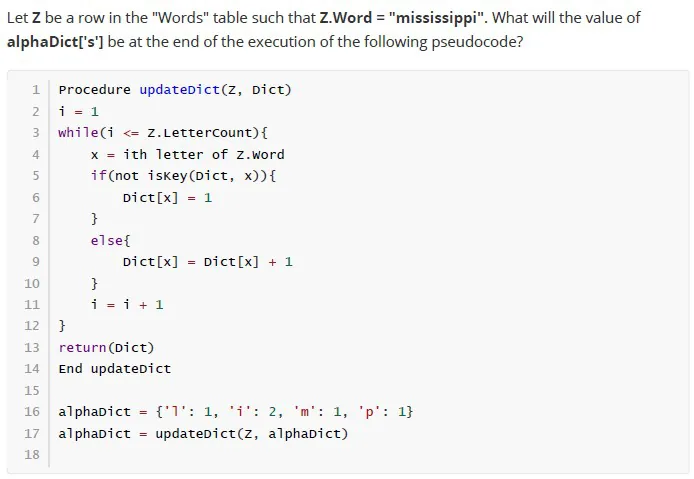 Your answer:
 - Q13NAT5 Marks·Write the number
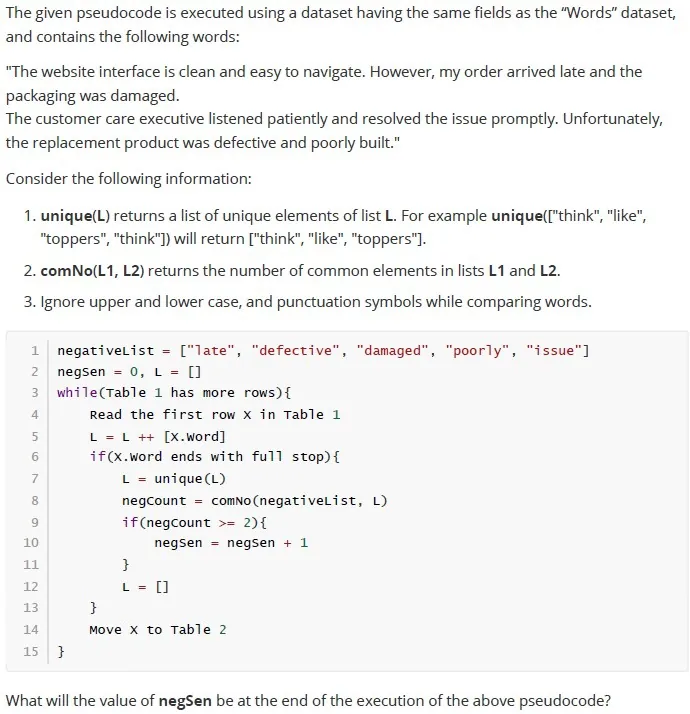 Your answer:
 - Q14NAT4 Marks·Write the number
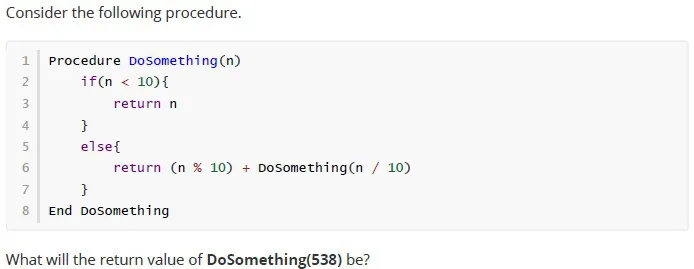 Your answer:
 Read the passage below, then answer Q15–Q16
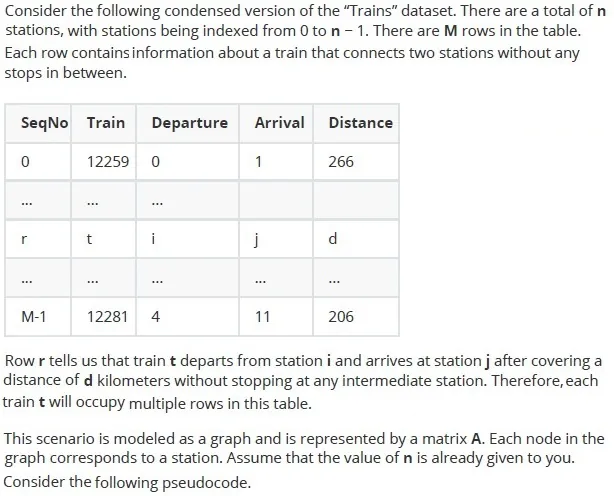
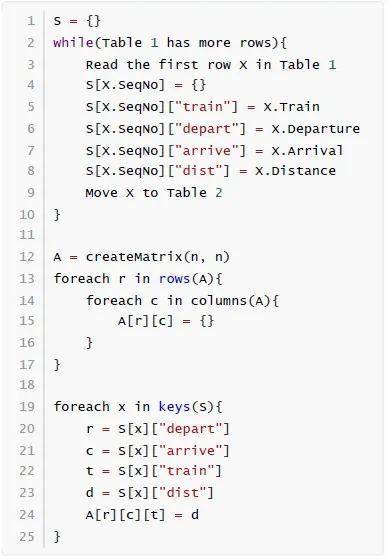
Based on the above data, answer the given subquestions.
Q15MCQ5 Marks·Choose one optionWhat does the value length(keys(A[i] [j])) represent?
- AIt is the number of trains that go from station i to j that stop at least one intermediate station.
- BIt is the number of trains that go from station i to j without stopping at any intermediate station.
- CIt is the number of trains that go from station j to i without stopping at any intermediate station.
- DIt is the number of trains that go from station i to j that stop at most one intermediate station.
- Q16MSQ6 Marks·Choose all correct options
ijMin is a procedure that accepts a pair of stations (i, j), and the matrix A as input. It returns a train which goes from i to j by covering the least distance, without stopping at any intermediate station. If there is no train connecting these two stations, the procedure returns -1. The pseudocode may have mistakes. Identify all of them (if any). It is a Multiple Select Question (MSQ).
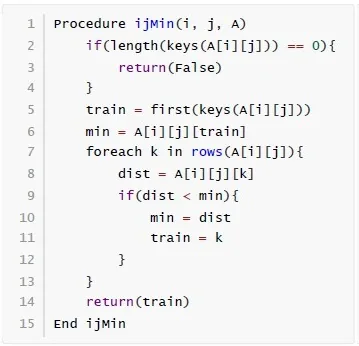
- AError in line 3
- BError in line 5
- CError in line 6
- DError in line 7
Read the passage below, then answer Q17–Q18
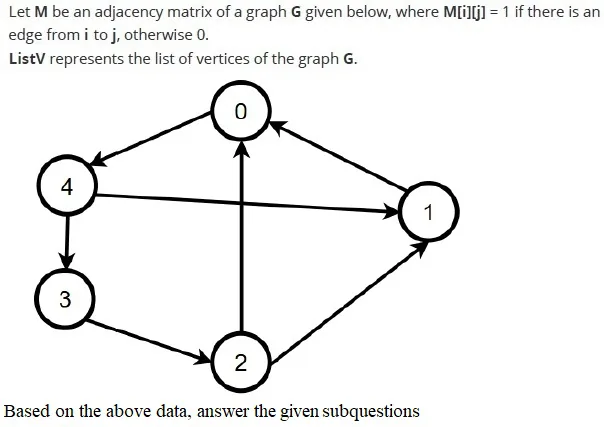 Q17MSQ5 Marks·Choose all correct options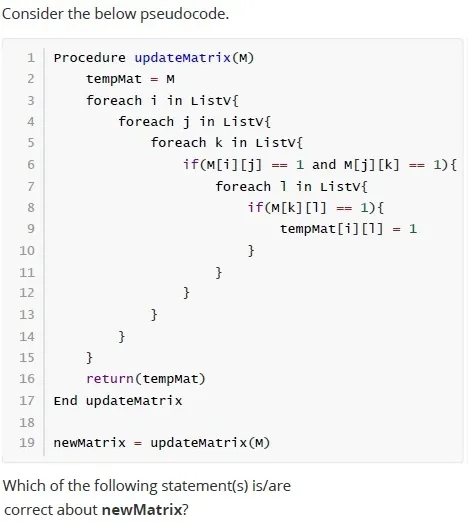
- AnewMatrix [0] [2] = 1
- BnewMatrix [0] [0] = 1
- CnewMatrix [0] [1] = 0
- DnewMatrix [1] [3] = 0
- Q18MCQ5 Marks·Choose one option
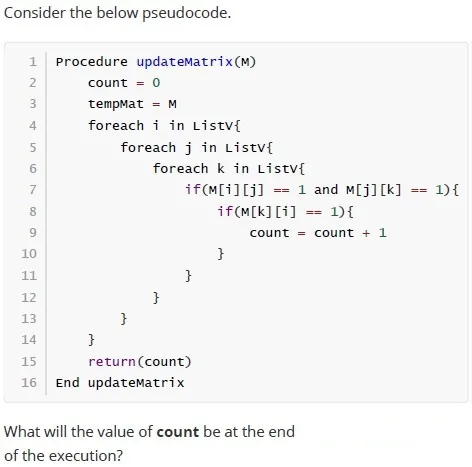
- A1
- B2
- C3
- D4
Read the passage below, then answer Q19–Q20
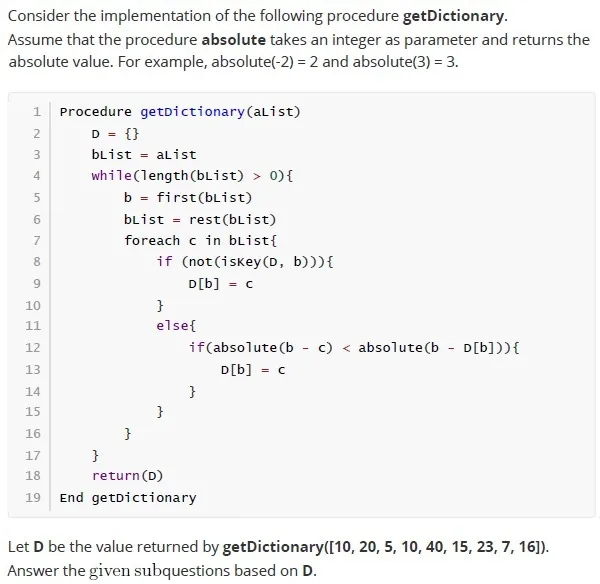 Q19MCQ5 Marks·Choose one option
What is the value of D[10] ?
- A7
- B10
- C30
- D20
- Q20NAT4 Marks·Write the number
What is the value of length(keys(D)) ?
Your answer: