Indian Institute of Technology Madras
BS Degree Programme · Examination & Study Paper
Tools in Data Science
End Term · 31 Aug 2025 (Afternoon)
Examination Instructions & Guidelines
- Solve on notebook/paper first before checking solutions.
- MCQ: Exactly 1 option is correct. Negative marking applies.
- MSQ: One or more options correct. Select all to score.
- Scientific calculator allowed for all calculations.
- Official answer key is sealed at the end of this sheet.
- Q1MCQ1 Mark·Choose one option
In a data science team using Git with feature branches, what is the recommended approach for integrating experimental analysis without disrupting the main workflow?
- ACommit directly to main branch with descriptive messages
- BCreate feature branch, conduct experiments, squash commits, and merge via pull request after peer review
- CUse git stash for all experimental work
- DCreate separate repository for each experiment
- Q2MCQ2 Marks·Choose one option
A retail analyst wants to find the total sales per store from a Pandas DataFrame df with columns store_id and sales_amount. Which is the most efficient Pandas command?
- Adf['sales_amount'].sum()
- Bdf.groupby('store_id')['sales_amount'].sum()
- Cdf['sales_amount'].groupby('store_id')
- Ddf.pivot_table(index='sales_amount', values='store_id')
- Q3MCQ1 Mark·Choose one option
A team is troubleshooting why a page loads slowly due to an API call taking a long time. Which Chrome DevTools tab should they use to find the slow request?
- ASources
- BNetwork
- CConsole
- DApplication
- Q4MCQ1 Mark·Choose one option
When standardizing inconsistent date formats in a dataset using OpenRefine, which transformation approach is most effective for handling multiple date patterns?
- ASimple text replacement operations
- BGREL expressions with multiple conditional date parsing functions
- CManual editing row by row
- DExport to Excel and use built-in date formatting
- Q5MCQ2 Marks·Choose one option
For a MySQL database storing e-commerce analytics with complex joins and time-based queries, which indexing approach optimizes query performance?
- ASingle primary key index per table
- BComposite indexes on frequently joined columns, covering indexes for common queries, and partitioning by date ranges
- CUnique indexes on all columns
- DNo indexes to avoid write overhead
- Q6MCQ1 Mark·Choose one option
When processing a streaming data source that generates CSV files every minute, which approach handles the data most efficiently without memory overflow?
- A

- B

- C

- D

- A
- Q7MCQ1 Mark·Choose one option
When working with uv in a team environment, which approach ensures reproducible dependency management across different development machines?
- A

- B

- C

- D

- A
- Q8MCQ1 Mark·Choose one option
For analyzing urban traffic patterns using GPS coordinate data, which combination of Python libraries provides the most comprehensive geospatial analysis capabilities?
- APandas + Matplotlib + NumPy
- BGeoPandas + Shapely + Folium + Contextily
- CPlotly + Seaborn + SciPy
- DBokeh + PyProj
- Q9MCQ2 Marks·Choose one option
For a web scraper that encounters 429 (Too Many Requests) status codes, which response strategy demonstrates ethical behavior?
- ASwitch to different IP addresses to bypass the limit
- BImplement exponential backoff starting with the Retry-After header value, reduce request frequency permanently
- CContinue scraping but filter out 429 responses
- DUse browser automation to appear more human-like
- Q10MCQ1 Mark·Choose one option
A data scientist accidentally committed sensitive credentials to a Git repository. Which sequence of commands safely removes the credentials from history?
- A

- B

- C

- D

- A
- Q11MCQ1 Mark·Choose one option
For analyzing a massive time-series dataset that exceeds available RAM, which pandas strategy optimizes memory usage during aggregation operations?
- A

- B

- C

- D

- A
- Q12MCQ1 Mark·Choose one option
For a machine learning API serving models with inconsistent response times, which monitoring strategy provides the most actionable insights?
- ATrack only HTTP response status codes
- BModel inference time + request queue depth + resource utilization + error rate tracking
- CMonitor only successful prediction accuracy
- DFocus exclusively on network bandwidth usage
Read the passage below, then answer Q13–Q15
Scenario 1: Healthcare Data Analytics Platform
A hospital system is developing a HIPAA-compliant analytics platform to process electronic health records, predict patient outcomes, and support clinical decision-making while ensuring data privacy and regulatory compliance.
Based on the above data, answer the given subquestions.
Q13MCQ1 Mark·Choose one optionWhen designing prompts for a clinical AI assistant, which approach best balances medical accuracy with regulatory compliance?
- AProvide definitive medical diagnoses to assist doctors
- BFocus on pattern recognition while explicitly requiring human clinical judgment and including appropriate medical disclaimers
- CRestrict responses to general medical information only
- DAvoid medical topics entirely to prevent liability
- Q14MSQ2 Marks·Choose all correct options
Which factors most significantly impact computational costs when processing large-scale clinical datasets with LLMs?(Select all that apply)
- AToken density of clinical notes and medical terminology
- BComplexity of medical reasoning required for clinical insights
- CHIPAA compliance overhead and security measures
- DContext window usage for patient history analysis
- EGeographic location of healthcare facility
- Q15MCQ1 Mark·Choose one option
Which prompt engineering approach generates the most clinically valuable insights for patient care optimization?
- A"Analyze patient symptoms"
- B"Review medical records"
- C"Based on this patient's lab results (glucose: 180 mg/dL, HbA1c: 8.2%), vital signs, and medication history, identify potential adjustment strategies for diabetes management while considering contraindications and monitoring requirements."
- D"Suggest treatments for diabetes"
Read the passage below, then answer Q16–Q20
Scenario 2: Smart Manufacturing Quality Control System
An automotive manufacturer implements an IoT-based quality control system that monitors production line metrics, detects defects in real-time, and optimizes manufacturing processes across multiple assembly plants.
System Architecture:
● IoT sensors at production stations (coordinates provided for each plant)
● Quality control hub: (42.3601^o N, 71.0589^o W)
● Real-time data streams: temperature, pressure, vibration, visual inspection
● ML models for defect prediction and process optimization
Based on the above data, answer the given subquestions.
Q16MCQ1 Mark·Choose one optionWhen a critical defect pattern is identified requiring immediate production line adjustment, which Git workflow ensures rapid deployment of updated quality parameters while maintaining manufacturing compliance?
- APush changes directly to production branch to minimize downtime
- BCreate quality-hotfix branch, implement changes with detailed validation, require quality engineer approval, and deploy with rollback capability
- CApply temporary manual overrides and update version control later
- DUse email to communicate changes without version control
- Q17MCQ2 Marks·Choose one option
Quality engineers need to analyze sensor data to identify equipment performance degradation patterns. Which command-line approach efficiently processes large sensor log files to extract anomalous readings?
- A

- B

- C

- D

- A
- Q18MCQ2 Marks·Choose one option
For deploying the quality control system across geographically distributed manufacturing plants with strict latency and reliability requirements, which architecture approach ensures optimal performance?
- ACentralized cloud-only deployment
- BEdge computing with local ML inference, container orchestration, and federated data synchronization
- CSingle server per plant without redundancy
- DManual quality control without automated systems
- Q19MCQ1 Mark·Choose one option
When detecting defects in real-time during high-speed production, which algorithmic approach best balances accuracy with processing speed requirements?
- AData based statistical analysis
- BOptimized computer vision pipeline with cascaded classifiers and early rejection mechanisms
- CManual visual inspection only
- DRandom sampling for quality checks
- Q20MCQ1 Mark·Choose one option
The system uses GPS coordinates to optimize supply chain logistics between plants. What is the computational advantage of using the Haversine formula in manufacturing logistics?
- AAccurate distance calculations for optimizing transportation routes and delivery scheduling
- BCalculating exact production times
- CDetermining equipment maintenance schedules
- DMeasuring network latency between plants
Read the passage below, then answer Q21–Q30
Scenario 3: Gaming Platform User Behavior Analysis
You're analyzing server logs from a multiplayer gaming platform during a major tournament event. The logs contain player actions, performance metrics, and system resource utilization data.
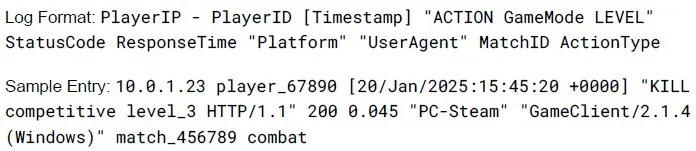
Analysis Requirements:
●Filter competitive gaming actions (kills, deaths, objectives) during tournament hours (14:00- 20:59)
●Differentiate between PC and console gaming patterns
●Track successful game events (status codes 200-299)
●Analyze player performance across different game modes
Based on the above data, answer the given subquestions.
Q21MCQ1 Mark·Choose one optionWhich log entry correctly represents a successful console objective action during the tournament window?
- A

- B

- C

- D

- A
- Q22MCQ1 Mark·Choose one option
For analyzing "competitive gaming actions during tournament hours with successful responses", which log fields are essential?
- APlayerIP, PlayerID, Platform, MatchID
- BTimestamp, ACTION, GameMode, StatusCode, ActionType
- CPlayerID, ResponseTime, UserAgent, Level
- DPlayerIP, Timestamp, Platform, ResponseTime
- Q23MCQ1 Mark·Choose one option
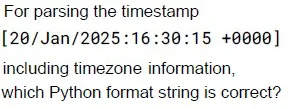
- A

- B

- C

- D

- A
- Q24MCQ1 Mark·Choose one option
To filter gaming actions between 14:00 and 20:59 tournament hours, which condition correctly validates the time range?
- A

- B

- C

- D

- A
- Q25MCQ1 Mark·Choose one option
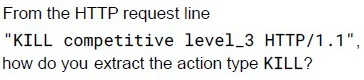
- A

- B

- C

- D

- A
- Q26MCQ1 Mark·Choose one option
Which approach most accurately identifies console gaming platforms from the Platform field?
- A

- B

- C

- D

- A
- Q27MCQ1 Mark·Choose one option
For identifying successful gaming events, which status code condition is most appropriate?
- A

- B

- C

- D

- A
- Q28MCQ1 Mark·Choose one option
To efficiently count different action types (KILL, DEATH, OBJECTIVE) from filtered tournament data, which approach is optimal?
- A

- B

- C

- D
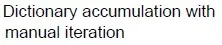
- A
- Q29MCQ1 Mark·Choose one option
If tournament action counts appear inconsistently high, which systematic debugging approach identifies the issue?
- AAssume tournament data corruption and exclude results
- BValidate each filter systematically: time range → game mode → action type → status codes → platform detection
- CReduce dataset randomly and extrapolate
- DFocus only on successful status codes
- Q30MCQ1 Mark·Choose one option
For processing massive gaming log files (100GB+) with memory constraints, which Python approach provides optimal performance?
- A

- B
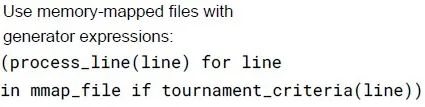
- C

- D

- A
Read the passage below, then answer Q31–Q34
Scenario 4: Supply Chain Optimization RAG System.
A global logistics company implements an advanced RAG system that integrates supplier data, transportation networks, demand forecasting, and regulatory information to optimize supply chain decisions across multiple industries and geographical regions.
Multi-Modal Supply Chain RAG Architecture:
●Supplier Intelligence: Vendor profiles, performance metrics, capacity data, compliance records ●Transportation Networks: Route optimization, carrier performance, fuel costs, delivery tracking ●Market Analysis: Demand forecasting, price volatility, seasonal patterns, economic indicators ●Regulatory Compliance: Trade regulations, customs requirements, sustainability standards ●Risk Assessment: Supply disruptions, geopolitical factors, weather impacts, financial stability Based on the above data, answer the given subquestions.
Q31MCQ1 Mark·Choose one optionWhat is the primary advantage of multi-modal RAG systems for supply chain management compared to traditional ERP systems?
- ALower implementation costs and simpler maintenance
- BReal-time integration of supplier performance, market dynamics, and regulatory changes for adaptive supply chain optimization
- CExclusive focus on historical transaction data
- DReduced data storage requirements
- Q32MCQ1 Mark·Choose one option
Which system prompt design best supports strategic supply chain decision-making across multiple stakeholders?
- A

- B

- C

- D

- A
- Q33MCQ1 Mark·Choose one option
A supply chain manager asks: "Given current semiconductor shortages, rising fuel costs, and new sustainability regulations, how should we restructure our electronics component sourcing strategy for the next quarter?" Which response demonstrates optimal supply chain synthesis?
- A"Semiconductor shortages require finding alternative suppliers and adjusting inventory levels."
- B"Here are 20 suppliers with current pricing and availability data: [lists suppliers with specifications]"
- C"Let's analyze this systematically: Current semiconductor lead times average 16-24 weeks (vs. normal 4-6 weeks). Three strategic options emerge: 1) Dual-sourcing with 60% Asian suppliers, 40% nearshore (reduces risk but increases costs 12-18%), 2) Forward buying with 90-day inventory (capital impact: $2.3M, storage costs: $45K/month), 3) Design modifications using available components (6-week timeline, engineering costs). Fuel cost increases affect logistics by 8-15%. New EU sustainability regs require supplier carbon disclosure. Which risk tolerance and capital constraints guide your preference?"
- D"Supply chain restructuring requires comprehensive analysis of multiple interdependent factors."
- Q34MCQ1 Mark·Choose one option
Which processing sequence correctly describes the supply chain RAG system's comprehensive optimization workflow?
- ASupply Chain Query → Supplier Database Search → Cost Comparison Report
- BSupply Chain Query → Keyword Matching → Return Cheapest Options
- CSupply Chain Query → Multi-Modal Analysis (supplier performance + market conditions + regulatory requirements + risk factors) → Scenario Modeling → Optimization Recommendations with Risk-Adjusted Trade-offs
- DSupply Chain Query → Historical Data Retrieval → Standard Report Generation