Indian Institute of Technology Madras
BS Degree Programme · Examination & Study Paper
Advanced Algorithms
End Term · 31 Aug 2025 (Afternoon)
Examination Instructions & Guidelines
- Solve on notebook/paper first before checking solutions.
- MCQ: Exactly 1 option is correct. Negative marking applies.
- MSQ: One or more options correct. Select all to score.
- NAT: Numerical response. No negative marking.
- Scientific calculator allowed for all calculations.
- Official answer key is sealed at the end of this sheet.
- Q1MCQ3 Marks·Choose one option
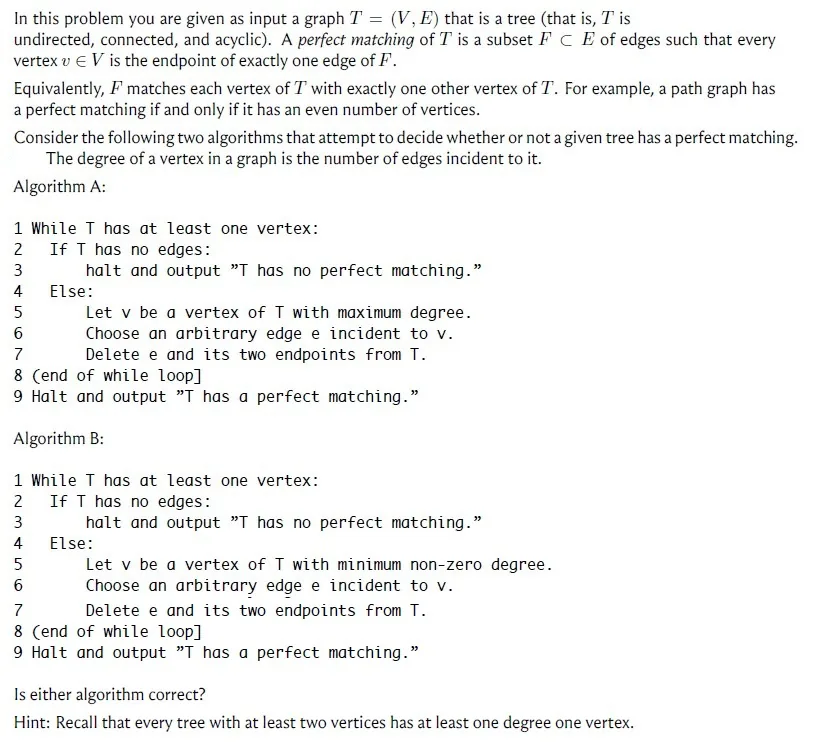
- ANeither algorithm always correctly determines whether or not a given tree graph has a perfect matching.
- BBoth algorithms always correctly determine whether or not a given tree graph has a perfect matching.
- CAlgorithm B always correctly determines whether or not a given tree graph has a perfect matching; algorithm A does not.
- DAlgorithm A always correctly determines whether or not a given tree graph has a perfect matching; algorithm B does not.
Read the passage below, then answer Q2–Q6
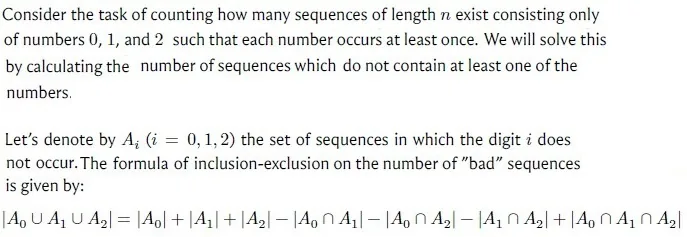
Based on the above data, answer the given subquestions.
Q2MCQ2 Marks·Choose one option
- A3^n
- B2^n
- Cn^3
- Dn^2
- Q3MCQ2 Marks·Choose one option

- A2^n
- Bn
- C1
- D0
- Q4MCQ2 Marks·Choose one option

- A3^n
- B2^n
- C1
- D0
- Q5NAT2 Marks·Write the number
For n = 4, calculate the number of sequences of length 3 consisting only of numbers 0, 1, and 2 such that each number occurs at least once.
Your answer: - Q6NAT2 Marks·Write the number
For n = 6, calculate the number of sequences of length 5 consisting only of numbers 0, 1, and 2 such that each number occurs at least once.
Your answer: - Q7MSQ3 Marks·Choose all correct options
- AIt is in P.
- BIt is in NP.
- CIt is NP-hard.
- DIt is NP-complete.
- Q8MCQ2 Marks·Choose one option

- ATRUE
- BFALSE
- Q9MCQ3 Marks·Choose one option
Choose the correct options:
- A

- B

- C

- A
- Q10MCQ3 Marks·Choose one option
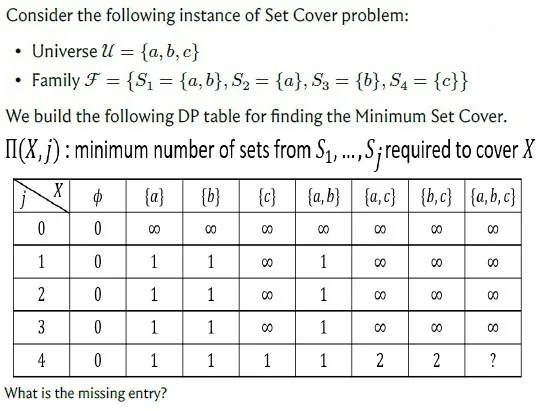
- A0
- B1
- C2
- D3
Read the passage below, then answer Q11–Q12
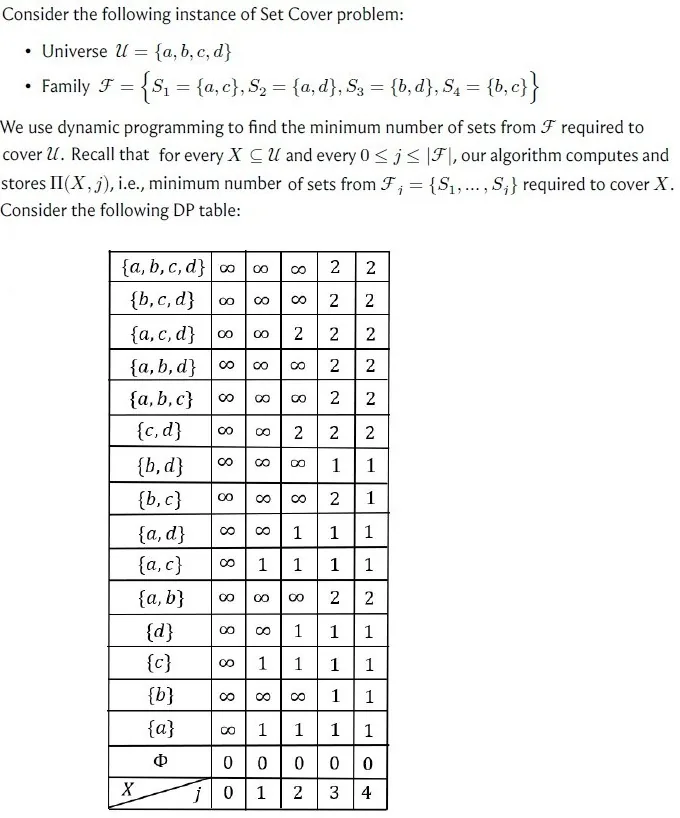
Based on the above data, answer the given subquestions.
Q11MCQ3 Marks·Choose one option
- A

- B

- C

- D

- A
- Q12MCQ3 Marks·Choose one option
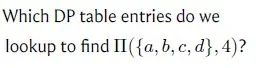
- A

- B

- C

- D

- A
- Q13MCQ3 Marks·Choose one option
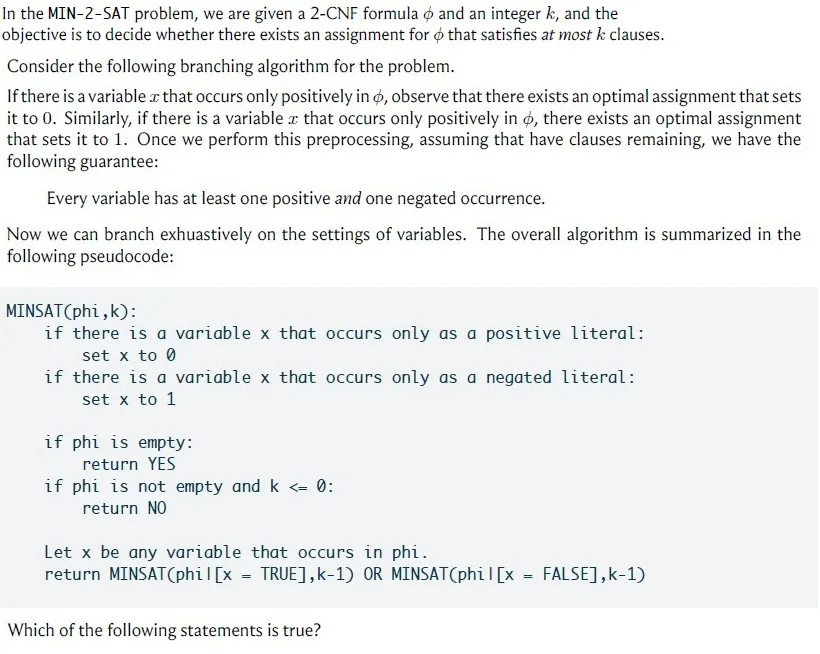
- AIn both branches of the algorithm, at least one clause is falsified.
- BIn both branches of the algorithm, at least one clause is satisfied.
- CIn both branches of the algorithm, at least two clauses are falsified.
- DIn both branches of the algorithm, at least two clauses are satisfied.
Read the passage below, then answer Q14–Q15
Consider the given statements and answer the subquestions if they are true or false.
Q14MCQ2 Marks·Choose one optionThe worst-case running time and expected running time are equal to within constant factors for any randomized algorithm.
- ATRUE
- BFALSE
- Q15MCQ2 Marks·Choose one option
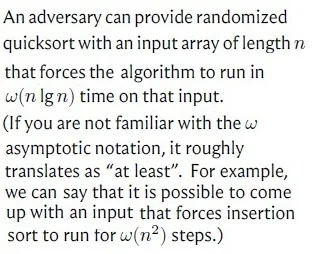
- ATRUE
- BFALSE
Read the passage below, then answer Q16–Q18
Answer the given subquestions.
Q16MCQ2 Marks·Choose one optionEvery linear program has a unique optimal solution.
- ATRUE
- BFALSE
- Q17MCQ2 Marks·Choose one option
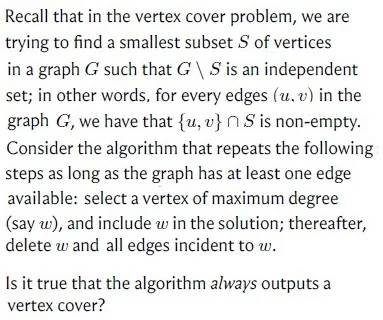
- AYes
- BNo
- Q18MCQ2 Marks·Choose one option
Recall that the size of an optimal vertex cover is at most twice the size of a maximum matching of a graph G. Are there examples of graphs where the size of the optimal vertex cover is exactly equal to twice the size of its maximum matching? For example, this is not true for a path on three vertices: the size of both the maximum matching and minimum vertex cover is 1
- AYes
- BNo
Read the passage below, then answer Q19–Q20
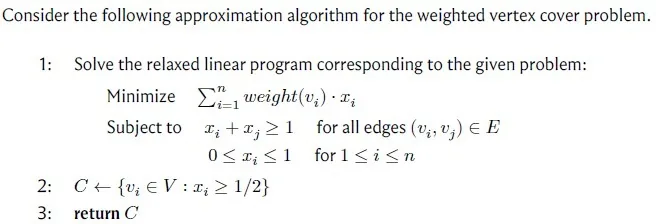
Based on the above data, answer the given subquestions.
Q19MCQ2 Marks·Choose one option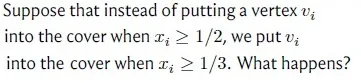
- AWe still get a valid solution, and the algorithm remains a 2-approximation.
- BWe still get a valid solution, and the algorithm becomes a 3-approximation.
- CWe may no longer get a valid solution.
- Q20MCQ2 Marks·Choose one option
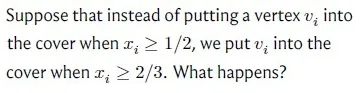
- AWe still get a valid solution, and the algorithm remains a 2-approximation.
- BWe still get a valid solution, and the algorithm becomes a (3/2)-approximation.
- CWe may no longer get a valid solution.
- Q21MCQ3 Marks·Choose one option

- A
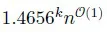
- B
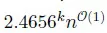
- C
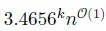
- D
- A